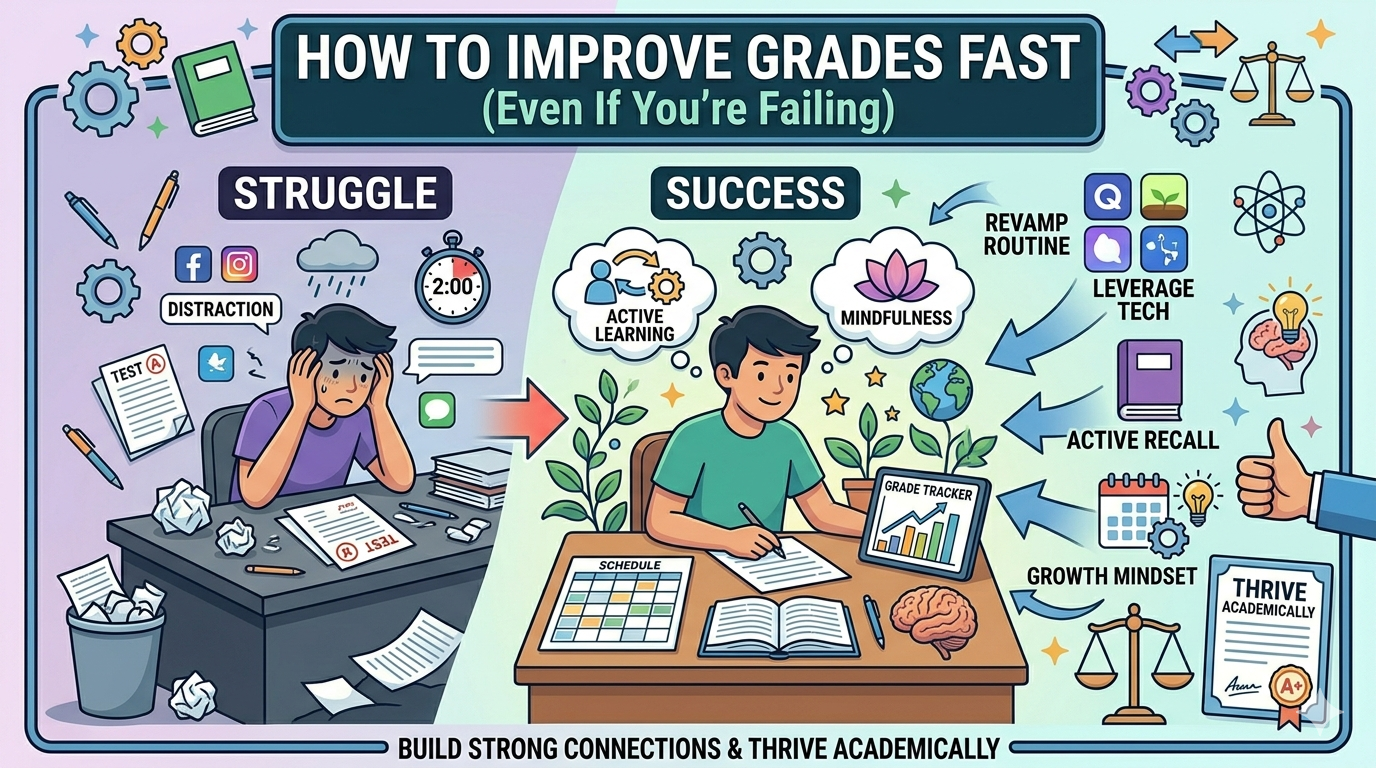
Starting college is exciting but it can also feel like standing at the edge of a cliff. Freshman year is full of firsts: first lecture halls, first late-night study sessions, first roommate conflicts, and first real taste of freedom. For many students, it’s the first time grades feel like they really matter, with freshman GPA potentially shaping scholarships, academic standing, and even future career paths. The good news? With the right strategies, you can not just survive freshman year, but thrive academically.
Understanding the Freshman Transition
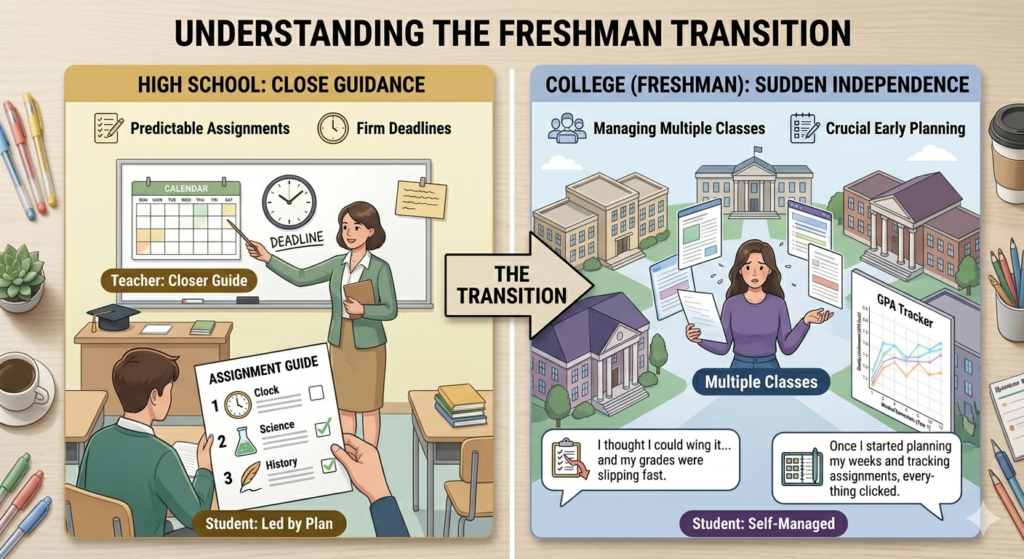
High school and college are worlds apart. In high school, teachers guide you closely, assignments are predictable, and deadlines are firm. In college, especially during your first year, you’re suddenly responsible for managing multiple classes, deadlines, and exams sometimes across different departments. Many freshmen underestimate this shift, which is why early planning is crucial.
Take it from Maya, a freshman at State University:
“I thought I could wing it like high school. By midterms, I realized I had no system, and my grades were slipping fast. Once I started planning my weeks and tracking assignments, everything clicked.”
This is common. The key is preventive strategies, not just scrambling to recover from bad grades.
Start Strong from Day One
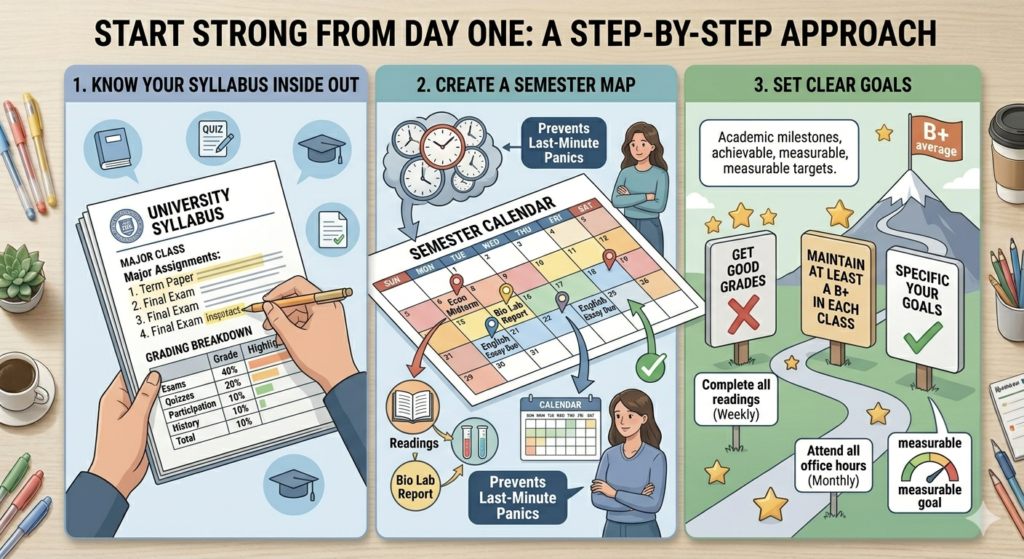
Success in your first semester begins before the first exam. Here’s a step-by-step approach:
Know Your Syllabus Inside Out
- On day one, review each course syllabus. Highlight major assignments, exams, and grading breakdowns.
Create a Semester Map:
- Plot all deadlines on a calendar. Include small tasks like readings or lab reports. Visualizing the semester helps prevent last-minute panics.
Set Clear Goals:
- Aim for achievable, measurable targets. Instead of “get good grades,” set “maintain at least a B+ in each class. Instead of just aiming to ‘get good grades,’ set measurable targets for each class. For a more detailed system, check out our complete step-by-step system for students.
Building a Structured Study System
Ad hoc studying is a freshman trap. A structured approach ensures consistency:
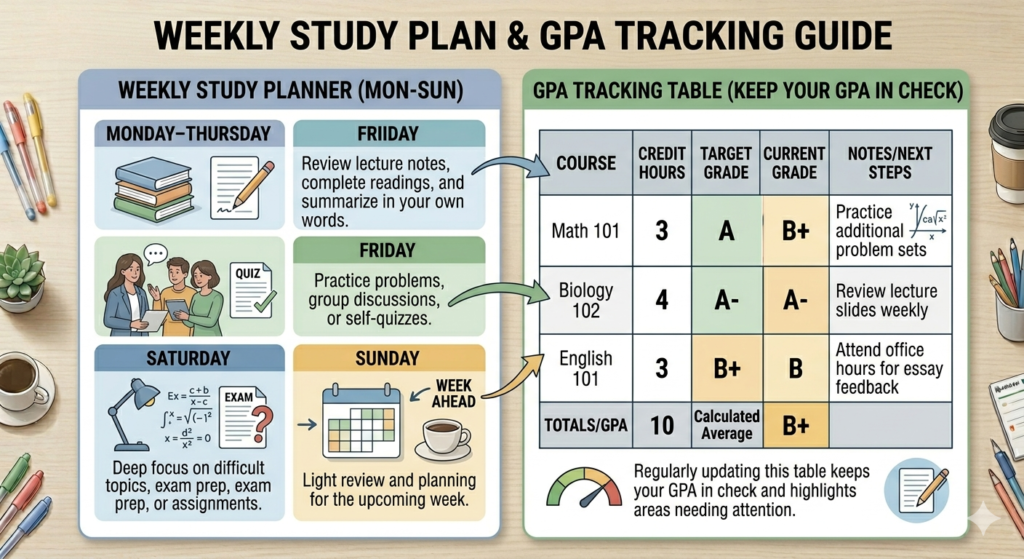
Weekly Study Plan:
- Monday–Thursday: Review lecture notes, complete readings, and summarize in your own words.
- Friday: Practice problems, group discussions, or self-quizzes.
- Saturday: Deep focus on difficult topics, exam prep, or assignments.
- Sunday: Light review and planning for the upcoming week.
Creating a structured study routine is key. You can also refer to our complete step-by-step guide for students for additional templates and detailed planning strategies.
GPA Tracking Table Example:
| Course | Credit Hours | Target Grade | Current Grade | Notes/Next Steps |
|---|---|---|---|---|
| Math 101 | 3 | A | B+ | Practice additional problem sets |
| Biology 102 | 4 | A- | A- | Review lecture slides weekly |
| English 101 | 3 | B+ | B | Attend office hours for essay feedback |
Regularly updating this table keeps your GPA in check and highlights areas needing attention.
Deep Study Techniques That Actually Work
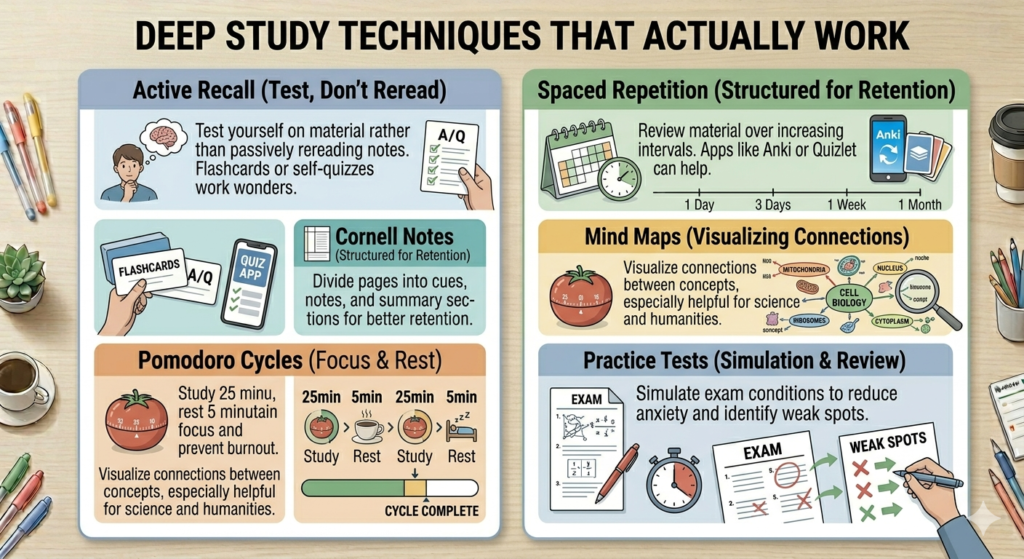
Many guides mention “study smart,” but here’s what that really means:
Active Recall:
- Test yourself on material rather than passively rereading notes. Flashcards or self-quizzes work wonders.
Spaced Repetition:
- Review material over increasing intervals. Apps like Anki or Quizlet can help.
Cornell Notes:
- Divide pages into cues, notes, and summary sections for better retention.
Mind Maps:
- Visualize connections between concepts especially helpful for science and humanities courses.
Pomodoro Cycles:
- Study 25 minutes, rest 5 minutes. Helps maintain focus and prevent burnout.
Practice Tests:
- Simulate exam conditions to reduce anxiety and identify weak spots.
While these techniques are highly effective, our step-by-step guide for students includes a comprehensive guide on applying these methods to maximize grades.
Avoiding Common Freshman Pitfalls
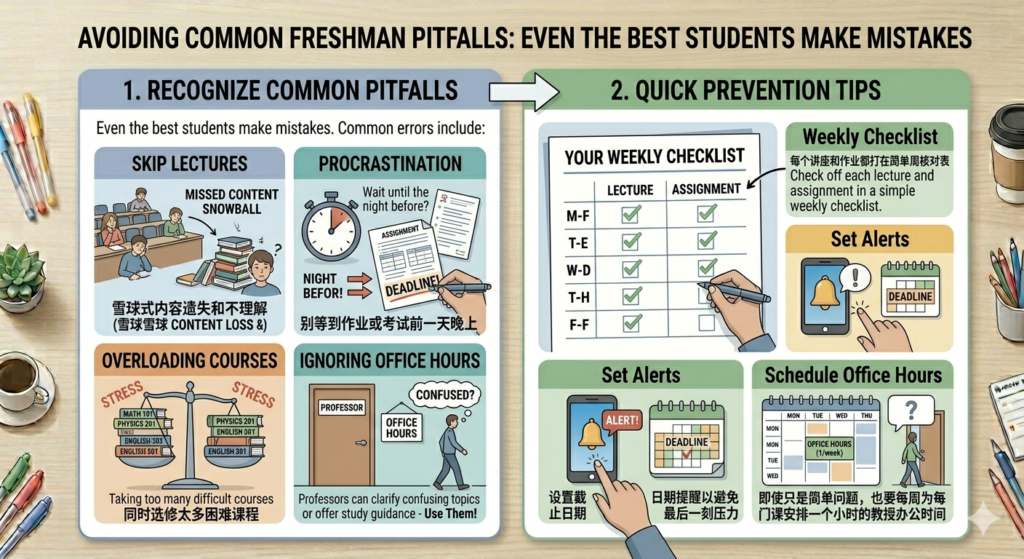
Even the best students make mistakes. Common errors include:
Skipping lectures
- Missing classes can snowball into missed content and poor understanding.
Procrastination:
- Don’t wait until the night before an assignment or exam.
Overloading courses:
- Taking too many difficult courses at once increases stress.
Ignoring office hours:
- Professors can clarify confusing topics or offer study guidance use them!
Quick prevention tips:
- Check off each lecture and assignment in a simple weekly checklist.
- Set alerts for deadlines to avoid last-minute stress.
- Schedule one office hour visit per week per class, even if it’s just a quick question.
Motivation and Mindset: The Secret Ingredient
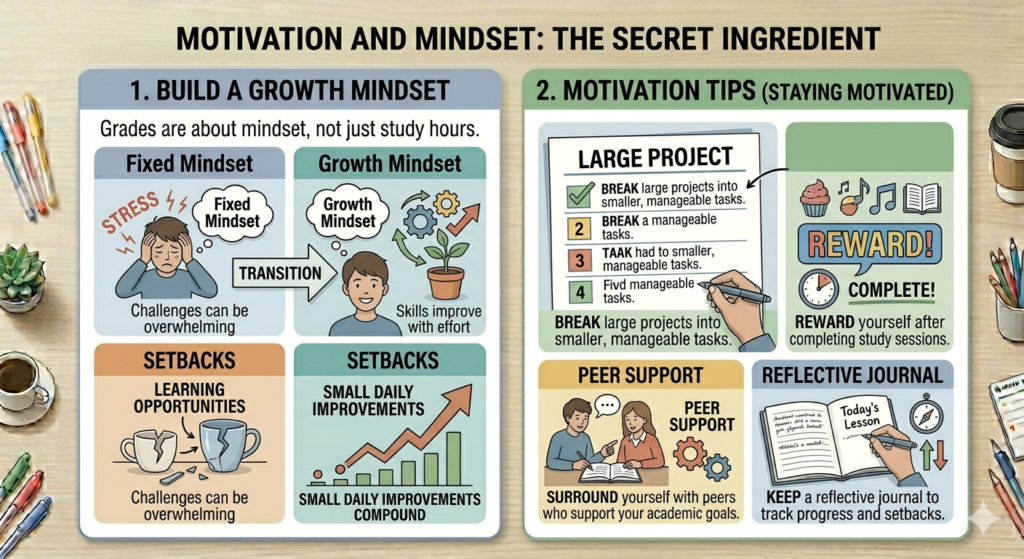
Grades aren’t just about study hours they’re about mindset. Freshman year challenges can be overwhelming, but maintaining a growth mindset makes a difference. Remember: skills improve with effort, setbacks are learning opportunities, and small daily improvements compound.
Tips for staying motivated:
- Break large projects into smaller, manageable tasks.
- Reward yourself after completing study sessions.
- Surround yourself with peers who support your academic goals.
- Keep a reflective journal to track progress and setbacks.
Lifestyle Habits That Support Academic Success
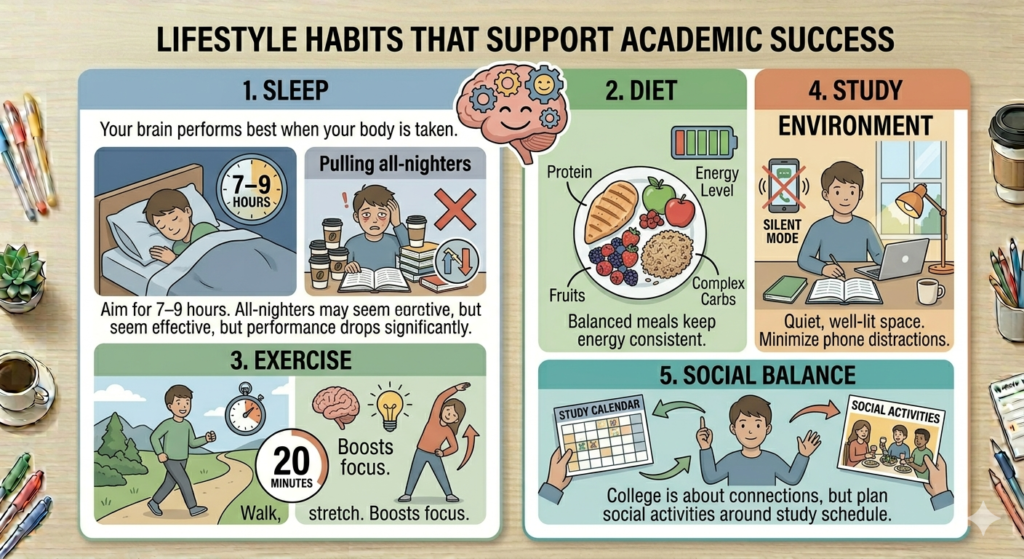
Your brain performs best when your body is taken care of:
Sleep:
- Aim for 7–9 hours. Pulling all-nighters may seem effective, but performance drops significantly without rest.
Diet:
- Balanced meals with protein, fruits, and complex carbs keep energy consistent.
Exercise:
- Even 20 minutes of walking or stretching boosts focus.
Study Environment:
- Find a quiet, well-lit space. Minimize phone distractions.
Social Balance:
- College is about connections, but plan social activities around your study schedule.
Sample Daily Schedule
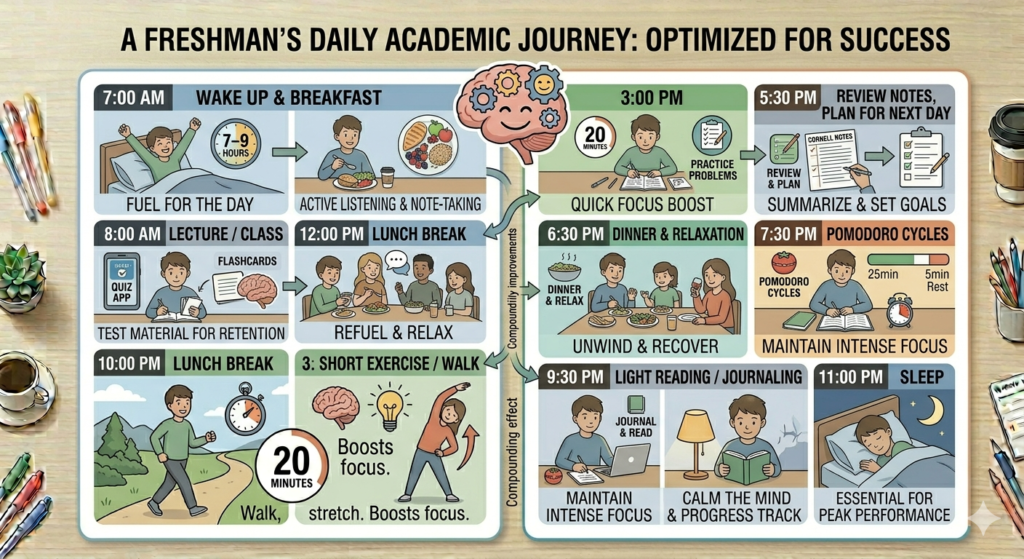
| Time | Activity |
|---|---|
| 7:00 AM | Wake up, breakfast |
| 8:00 AM | Lecture / class |
| 10:00 AM | Study session: active recall |
| 12:00 PM | Lunch break |
| 1:00 PM | Lab work / assignments |
| 3:00 PM | Short exercise / walk |
| 3:30 PM | Study session: practice problems |
| 5:30 PM | Review notes, plan for next day |
| 6:30 PM | Dinner & relaxation |
| 7:30 PM | Study session: Pomodoro cycles |
| 9:30 PM | Light reading / journaling |
| 11:00 PM | Sleep |
Exam Week Variation: Swap lighter review for longer focused practice tests and targeted problem areas.
Sample Email to Professor
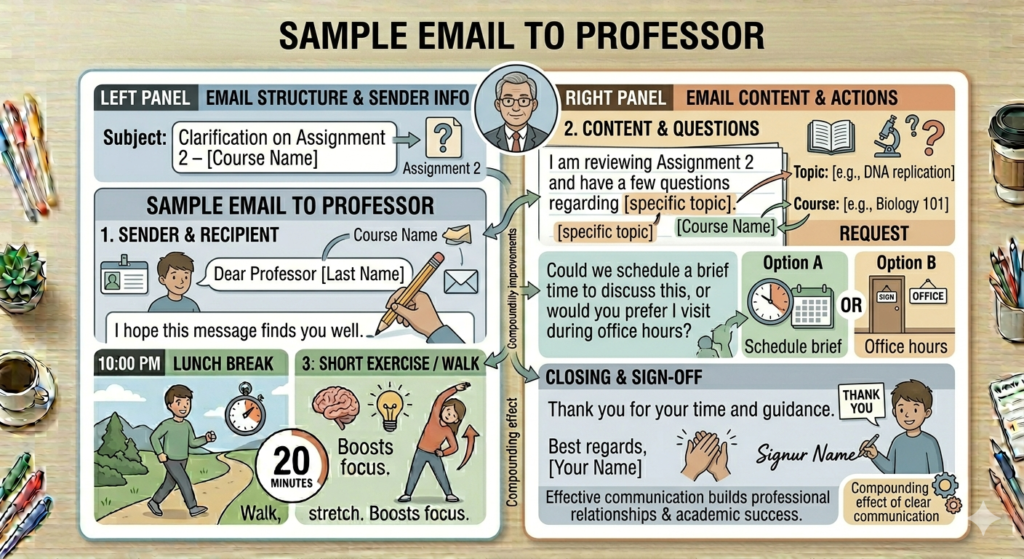
Subject: Clarification on Assignment 2 – [Course Name]
Dear Professor [Last Name],
I hope this message finds you well. I am reviewing Assignment 2 and have a few questions regarding [specific topic]. Could we schedule a brief time to discuss this, or would you prefer I visit during office hours?
Thank you for your time and guidance.
Best regards,
[Your Name]
Visualizing Success
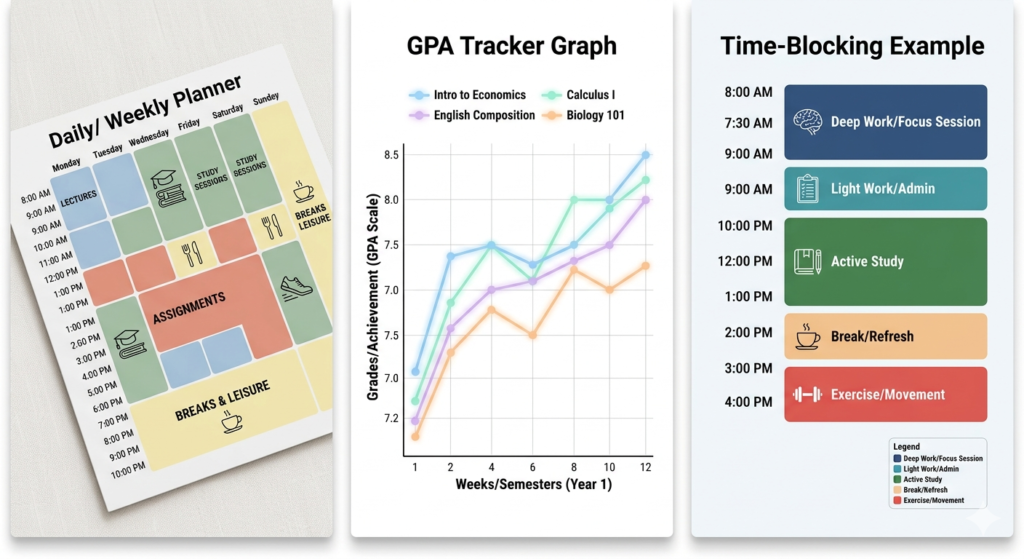
For freshmen, visuals make planning intuitive:
- Daily/Weekly Planner Infographic: Color-coded blocks for lectures, study, and breaks.
- GPA Tracker Visual: Graphs showing grades over time for each course.
- Time-Blocking Example: Visualize when deep work and light work occur in a day.
Actionable Next Steps
- Print your syllabus and create a semester calendar.
- Set weekly goals for each course.
- Use active recall and spaced repetition for all subjects.
- Track your GPA and progress in a simple table or app.
- Maintain healthy habits sleep, diet, exercise, and study environment.
Remember, freshman year is the foundation. The habits you build now shape your academic performance for the rest of college.
Final Thoughts
Getting good grades in your first year isn’t about genius it’s about planning, consistent effort, and smart study strategies. Start strong, study strategically, avoid common pitfalls, and take care of your body and mind. Success is built day by day, lecture by lecture, assignment by assignment.