
Exams can feel like mountains, especially finals or cumulative tests covering weeks or months of material. For a comprehensive approach on achieving academic excellence, check out our complete guide on how to get good grades, which covers strategies across all school levels.
Planning for Cumulative Exams
Before diving into multi-subject exam planning, it’s essential to understand the fundamental principles of effective studying. You can revisit our pillar guide on how to get good grades to reinforce these core strategies.
Step 1: Create a Master Exam Map
- List all subjects and topics that will appear in each exam.
- Highlight areas where you struggled during the semester.
- Assign difficulty levels: easy, medium, hard.
Example:
- Biology: Genetics (hard), Ecology (medium), Cell Division (easy)
- History: World Wars (hard), Ancient Civilizations (medium), Civil Rights (easy)
- Math: Calculus (hard), Algebra (medium), Statistics (easy)
This visual map helps you prioritize study sessions weeks in advance.
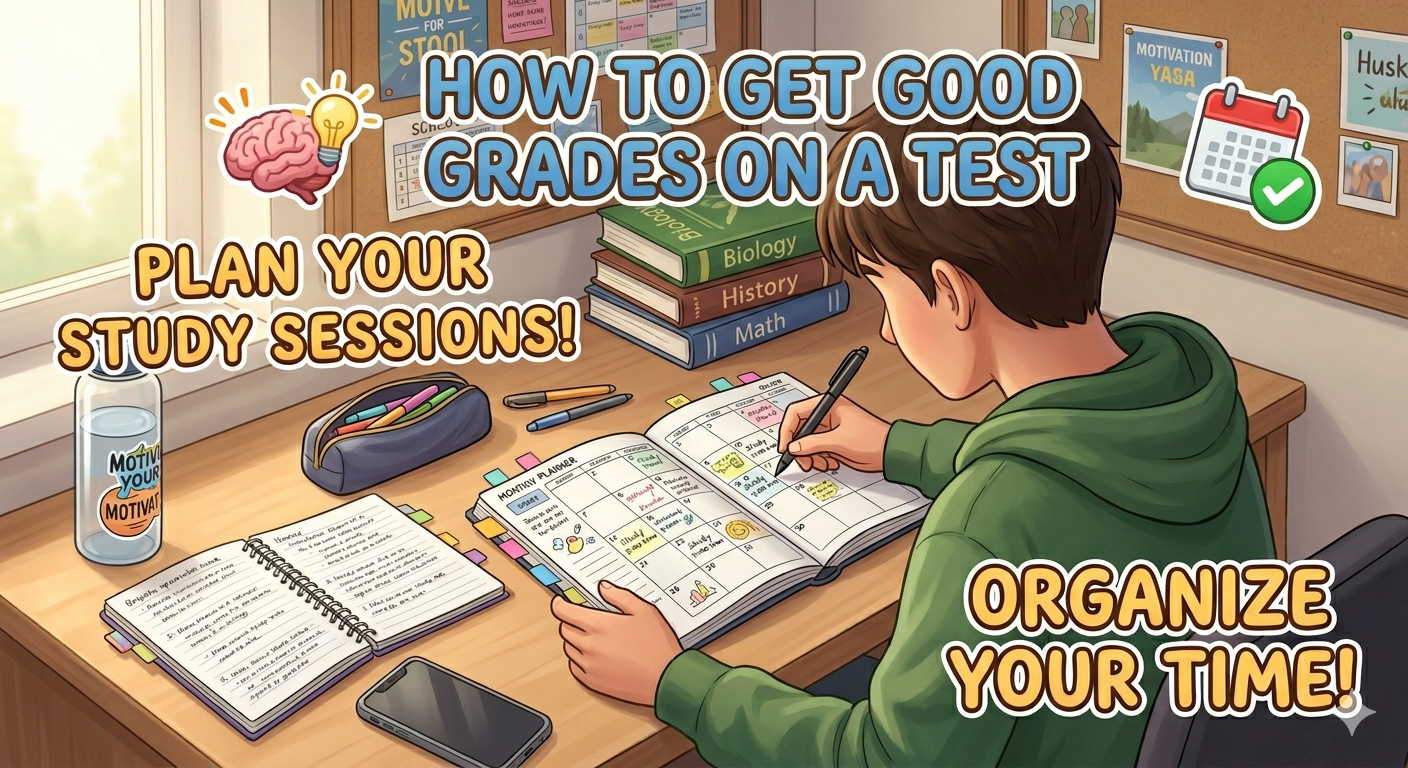
Step 2: Break Study Goals Into Weeks
- Start 4–6 weeks before exams.
- Assign topics to specific weeks, increasing focus on harder areas as exams approach.
- Include review sessions for previously studied material to reinforce memory.
Tip: Summarize key points on a single page at the end of each session—your quick-review sheets.
Multi-Subject Study Schedule & Rotation
Handling multiple exams in a week requires strategic rotation.
Step 1: Prioritize by Difficulty and Exam Date
- Focus on the hardest or least familiar subjects in your peak focus hours (usually mornings).
- Medium-difficulty subjects in the afternoon, easier ones in the evening.
Step 2: Rotate Subjects
- Avoid studying one subject all day.
- Interleaving helps improve retention and reduce fatigue.
Sample Exam Week Schedule:
| Time | Subject Focus | Strategy |
|---|---|---|
| 8–9:30am | Math – Calculus | Solve practice problems |
| 9:45–11:15am | History – World Wars | Create timeline mind maps |
| 11:30–12:30pm | Biology – Genetics | Draw diagrams and key concepts |
| 1–2pm | Lunch/Break | Light walk, hydrate |
| 2–3pm | Math – Algebra | Quick review exercises |
| 3:15–4:15pm | History – Civil Rights | Summarize key points on one page |
Exam Week Daily Routine & Time-Blocking
Consistency during exam week is crucial.
Morning Routine
- Wake up at a consistent time.
- Eat a protein-rich breakfast to fuel focus.
- Review one-page summaries of key topics.
Midday Study Blocks
- Deep study sessions: 45–60 minutes with 10-minute breaks.
- Alternate subjects to maintain engagement.
Evening Routine
- Short, active review using flashcards or self-quizzes.
- Reflect on weak areas and plan the next day.
- Sleep 7–9 hours to consolidate memory.
Exam-Focused Study Techniques
While mind maps, cheat sheets, and one-page summaries are excellent exam-focused tools, the foundational study methods outlined in our full guide on how to get good grades can complement these techniques and ensure consistent results.
Mind Maps
- Connect ideas visually to see relationships across topics.
- Works best for History, Literature, or Science.
One-Page Summaries
- Condense entire chapters into a single sheet.
- Great for last-minute review.
Self-Created Cheat Sheets
- Writing formulas, timelines, or definitions in your own words improves memory.
- Identifies gaps in understanding.
Practice Exams
- Simulate real conditions: timed, quiet, and distraction-free.
- Analyze mistakes and adjust study priorities.
Exam Day Preparation
- Nutrition: Light, protein-rich breakfast; avoid greasy food.
- Hydration: Water keeps your focus sharp.
- Mental Warm-Up: 10–15 minutes reviewing summaries, not new material.
- Arrival: Get to the exam room early to avoid last-minute stress.
- Focus Techniques: Deep breathing, visualization, or short meditation.
Example: Take three slow, deep breaths before opening the exam booklet and read all instructions carefully.
Managing Back-to-Back Exams
- Micro-Review: 15–20 minutes on key points of the second exam between sessions.
- Energy Management: Light snacks like nuts or fruit.
- Short Breaks: Walk, stretch, or do light activity to refresh focus.
Preventing Burnout During Exam Season
- Active Breaks: Stretch, walk, or exercise briefly instead of scrolling on your phone.
- Social Check-Ins: Short interactions with friends or family boost mood.
- Mindfulness: 5–10 minutes of meditation or controlled breathing reduces anxiety.
- Reward Yourself: Small incentives after completing study goals can motivate.
Weekly Progress Tracking & Self-Assessment
- Daily Review: Mark topics as “mastered,” “needs review,” or “weak.”
- Weekly Mock Test: Simulate exam conditions to evaluate readiness.
- Adjust Schedule: Focus the next week on weaker areas.
Tip: After a weekly mock test, allocate extra time to weak diagrams, timelines, or concepts.
FAQs
How do I revise multiple subjects efficiently for finals?
Rotate subjects daily, focus on weak areas first, and use one-page summaries for quick review.
How can I handle exam stress during a busy week?
Prioritize sleep, hydration, short active breaks, and mindfulness exercises.
How far in advance should I plan for cumulative exams?
Start 4–6 weeks before finals. Break topics into weekly study blocks.
How can I recover if a midterm went poorly?
Identify weak areas, target them in revision, and use practice exams to rebuild confidence.
How do I balance revision for multiple exams in one day?
Use micro-review sessions, maintain energy with snacks, and take short breaks to stay focused.
Conclusion
Exams don’t have to be overwhelming. Combine the structured exam strategies above with the long-term techniques from our pillar blog on how to get good grades to maximize your performance and achieve lasting academic success.
zdjxqswiyshlyvphyxghpzumlyimvn
wildtruck wild trucks
погода в алматы новости свежие новости алматы сегодня
Ищете товары для охоты? охотничий магазин товары для охоты поможет подобрать большой ассортимент для охоты и отдыха на природе. В ассортименте доступны охотничья экипировка, охотничья одежда, охотничья обувь, оптические приборы, полезные аксессуары и товары для активного отдыха. Выбирайте подходящие товары, ориентируйтесь на свои задачи и покупайте продукцию через сайт. Большой ассортимент поможет быстро найти нужные товары.
Заказать сегодня доставка цветов на дом Омск можно через каталог. Выбирайте свежие розы для любимых. В каталоге представлены подарочные наборы. Указывайте адрес получателя и дарите положительные эмоции на праздник.
Телесериал онлайн сверхъестественное 2005 в хорошем качестве можно прямо на сайте. Все сезоны и серии доступны для просмотра. Следите за приключениями братьев Винчестеров, которые сражаются с демонами и монстрами. Вместе с героями герои сталкиваются с демонами, ангелами, духами и другими существами. Кастиэль становится союзником Винчестеров, а новые противники угрожают героям. Выбирайте нужный сезон и серию и смотрите Сверхъестественное онлайн.
Нужно иптытание средств измерений? сертификат об утверждении типа средств измерений организация испытаний, подготовка документов, получение свидетельства и внесение СИ в Госреестр. Сопровождение процедуры на всех этапах с учетом требований законодательства.