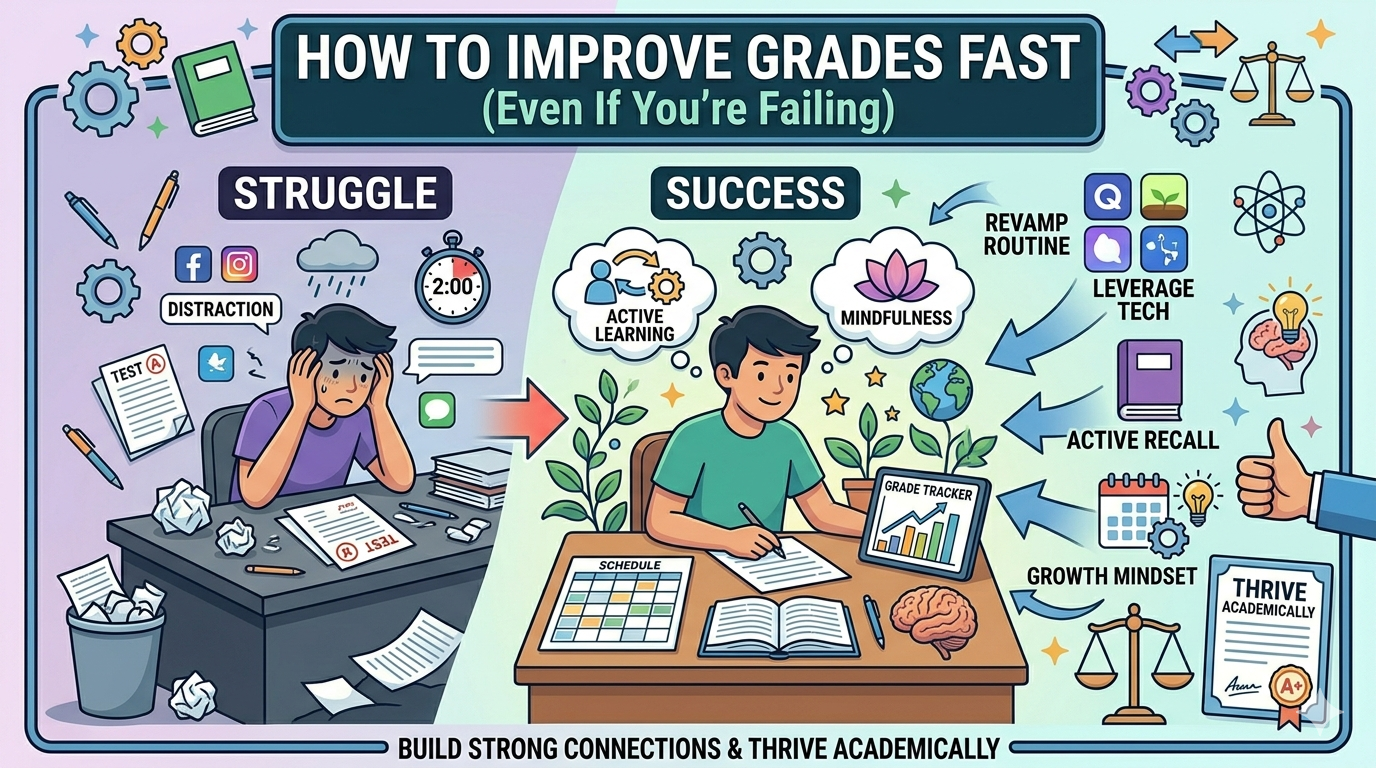
Improving your grades quickly, especially if you’re struggling or even failing, can feel overwhelming. But don’t worry it’s absolutely achievable with the right strategies, mindset, and consistent effort. Whether you’re in middle school, high school, or college, this guide provides research-backed methods to help you regain control and improve your grades fast. Let’s explore actionable steps that can help turn things around even if you’re feeling at rock bottom.
Learn more about how to get good grades our detailed pillar guide [Click Here To Read].
Understanding the Situation: Why You Might Be Struggling
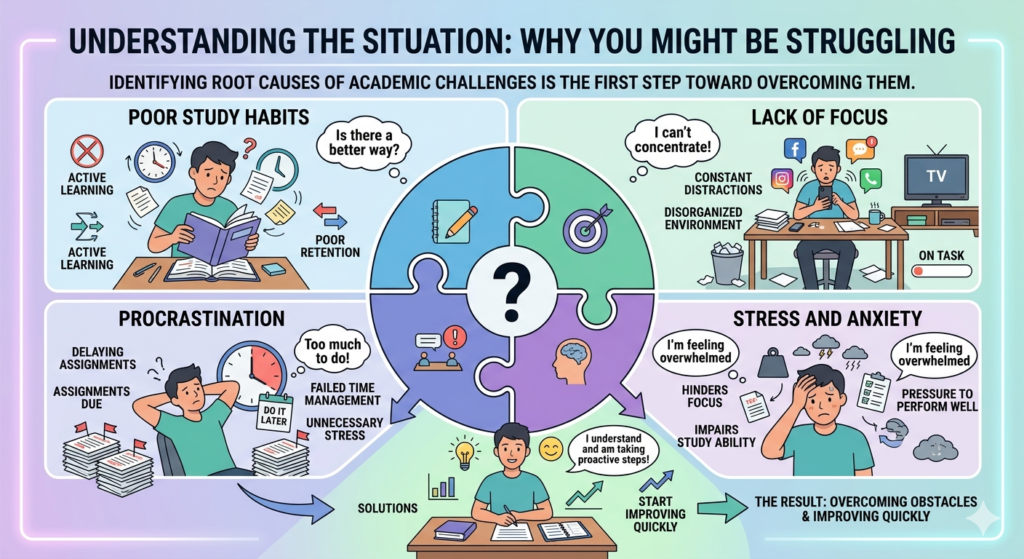
Before jumping into solutions, it’s crucial to understand why your grades might not be where you want them to be. Identifying the root causes of your academic struggles is the first step toward overcoming them. Many students face challenges such as:
- Poor Study Habits: Cramming the night before or relying on passive reading often leads to poor retention.
- Lack of Focus: Constant distractions from phones, social media, or even disorganized study environments make it difficult to stay on task. This is a critical aspect of your study environment.
- Procrastination: Delaying assignments and failing to manage time effectively can create unnecessary stress and overwhelm. Learning effective time management techniques is crucial here.
- Stress and Anxiety: Feeling pressured to perform well can hinder focus and impair your ability to study effectively.
By understanding these common obstacles, you can take proactive steps to address them and start improving quickly. For more on time management and academic habits,
Step 1: Revamp Your Study Routine
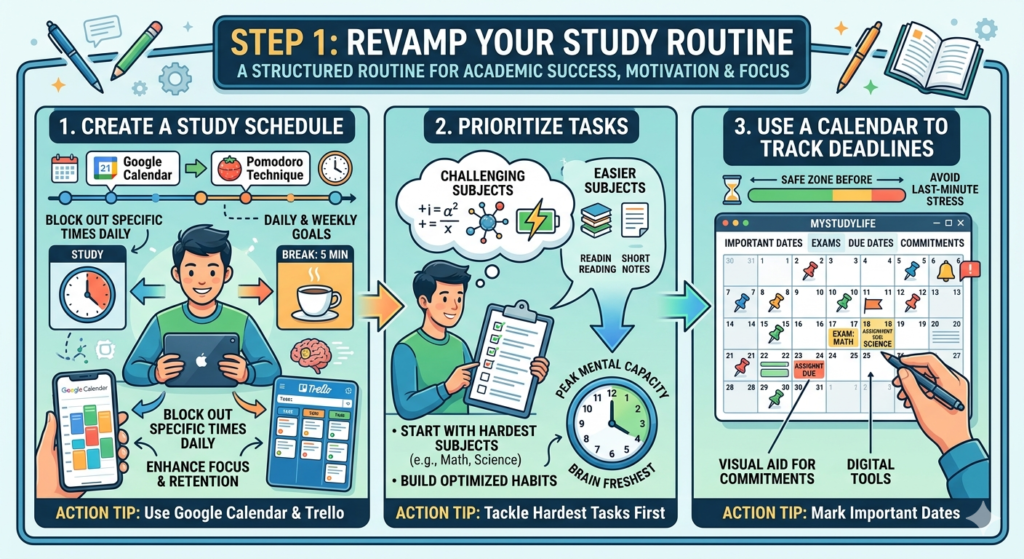
A structured study routine is the cornerstone of academic success. To get back on track, here’s how you can create a study routine that will keep you organized, motivated, and focused:
Create a Study Schedule
Block out specific times for studying each day. Research shows that breaking study sessions into smaller intervals (e.g., Pomodoro Technique study for 25 minutes, take a 5-minute break) enhances focus and retention. This is a proven focus technique that works well for many students.
Action Tip: Use Google Calendar or a similar app to set daily and weekly study goals. You can also use Trello to manage your study sessions and assignments more effectively.
Prioritize Tasks
Start with the most challenging subjects when your brain is freshest, like math or science. Leave easier subjects for later in the day. This approach is key to building academic habits that optimize your focus during peak hours.
Action Tip: Tackle your hardest tasks first, ensuring that you’re working when you’re at your peak mental capacity.
Use a Calendar to Track Deadlines
Mark important dates such as exams and assignment due dates. This visual aid will help you stay on top of your commitments and avoid unnecessary last-minute stress. Digital tools like MyStudyLife are excellent for this purpose.
Step 2: Leverage Technology for Smart Studying
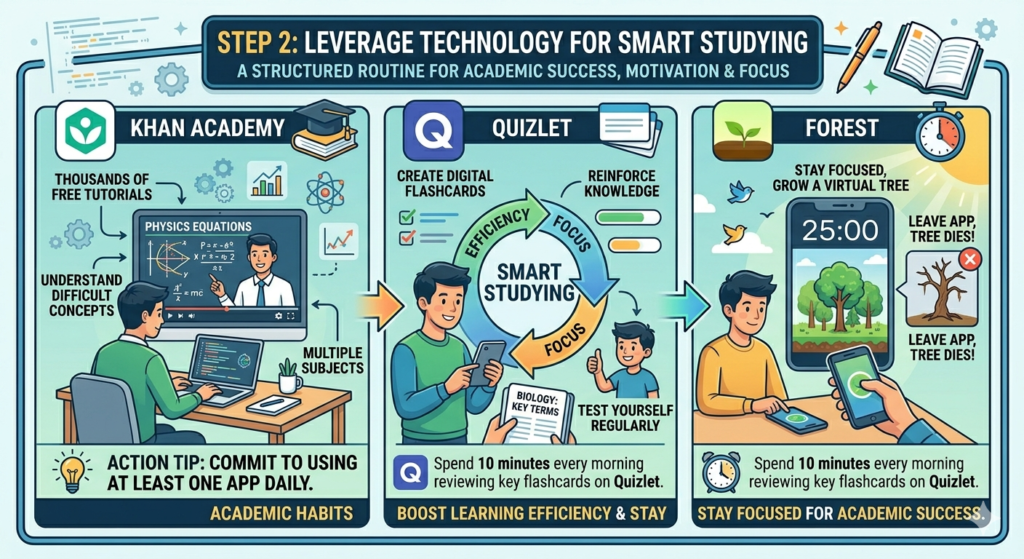
Harness the power of technology to enhance your study sessions. With the right tools, you can boost your learning efficiency and stay focused:
Use Educational Apps
- Khan Academy: Access thousands of free tutorials to understand difficult concepts in various subjects.
- Quizlet: Create flashcards to reinforce knowledge and test yourself regularly.
- Forest: An app that helps you stay focused by growing a virtual tree while you study if you leave the app, the tree dies!
Action Tip: Commit to using at least one app daily. For example, spend 10 minutes every morning reviewing key flashcards on Quizlet.
Step 3: Focus on Active Learning Techniques
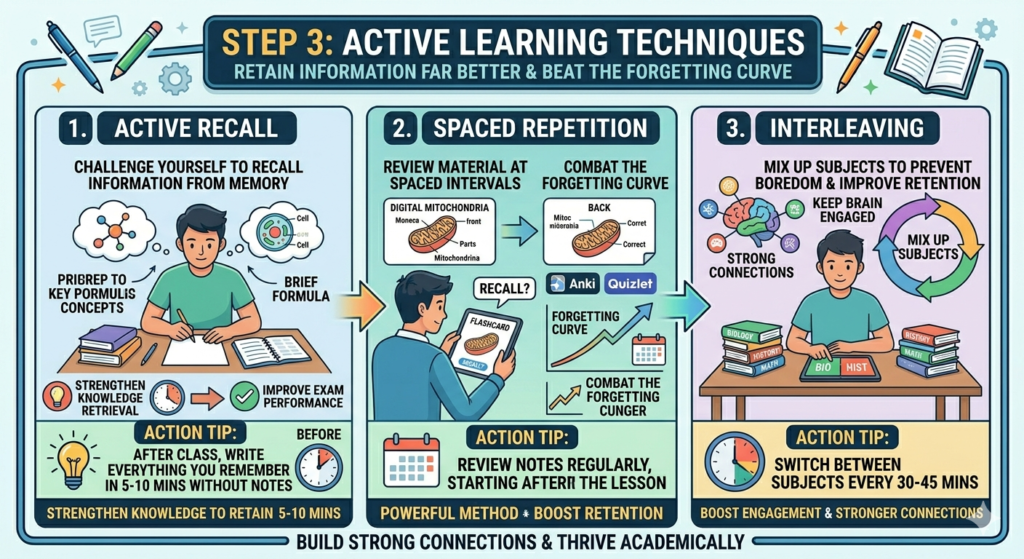
To improve your grades fast, it’s essential to go beyond passive reading and focus on active learning strategies. These techniques help your brain retain information far better:
Active Recall
Instead of rereading your notes, challenge yourself to recall key information from memory. This strengthens your ability to retrieve knowledge during exams.
Action Tip: After class, take 5-10 minutes to write down everything you remember from the lesson without looking at your notes. For deeper learning strategies, explore our How to Get Good Grades guide.
Spaced Repetition
Review material at spaced intervals to combat the “forgetting curve” and help retain information for longer. Using tools like Anki or Quizlet for spaced repetition is a powerful method.
Action Tip: Use spaced repetition to review your notes regularly, starting from the day after the lesson.
Interleaving
Mix up your subjects to keep your brain engaged and build stronger connections. This is one of the best focus techniques for preventing boredom and improving retention.
Action Tip: Rather than studying one subject for hours, switch between subjects every 30-45 minutes to boost engagement and retention.
Step 4: Develop a Mindset for Academic Success
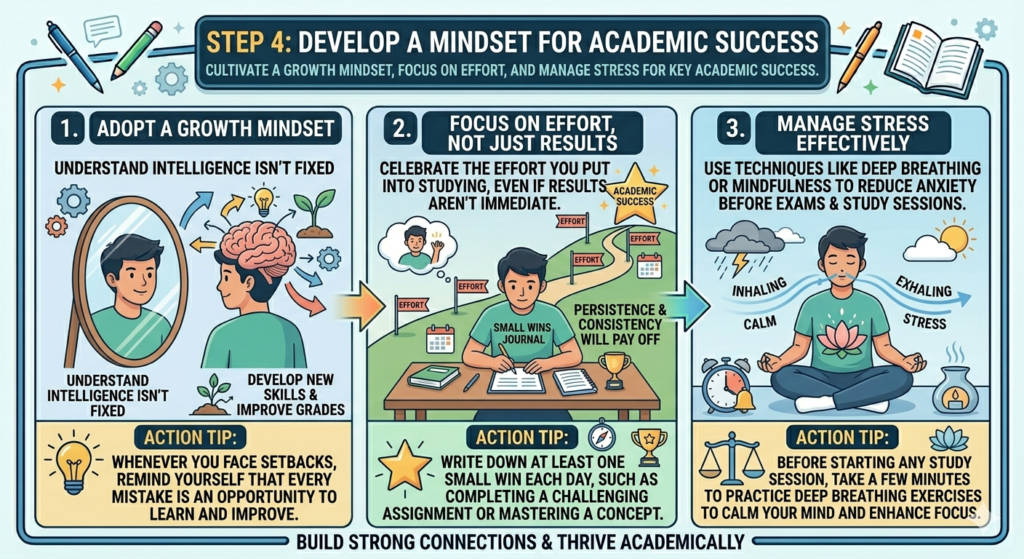
Your mindset plays a huge role in how quickly you can improve your grades. Cultivating a growth mindset believing that you can improve with effort and perseverance is key to academic success:
Adopt a Growth Mindset
Understand that intelligence isn’t fixed. With dedication, you can develop new skills and improve your grades. Cultivating this motivation strategy helps in staying committed to improvement.
Action Tip: Whenever you face setbacks, remind yourself that every mistake is an opportunity to learn and improve. To learn more about how mindset affects academic performance, check out How to Get Good Grades.
Focus on Effort, Not Just Results
Celebrate the effort you put into studying, even if the results aren’t immediate. Persistence and consistency will pay off. This shift in mindset is one of the most powerful academic habits you can develop.
Action Tip: Write down at least one small win each day, such as completing a challenging assignment or mastering a difficult concept.
Manage Stress Effectively
Use techniques like deep breathing or mindfulness to reduce anxiety before exams or study sessions. Incorporating mindfulness practices into your routine helps manage study stress and improves focus.
Action Tip: Before starting any study session, take a few minutes to practice deep breathing exercises to calm your mind and enhance focus.
Step 5: Seek Support and Resources
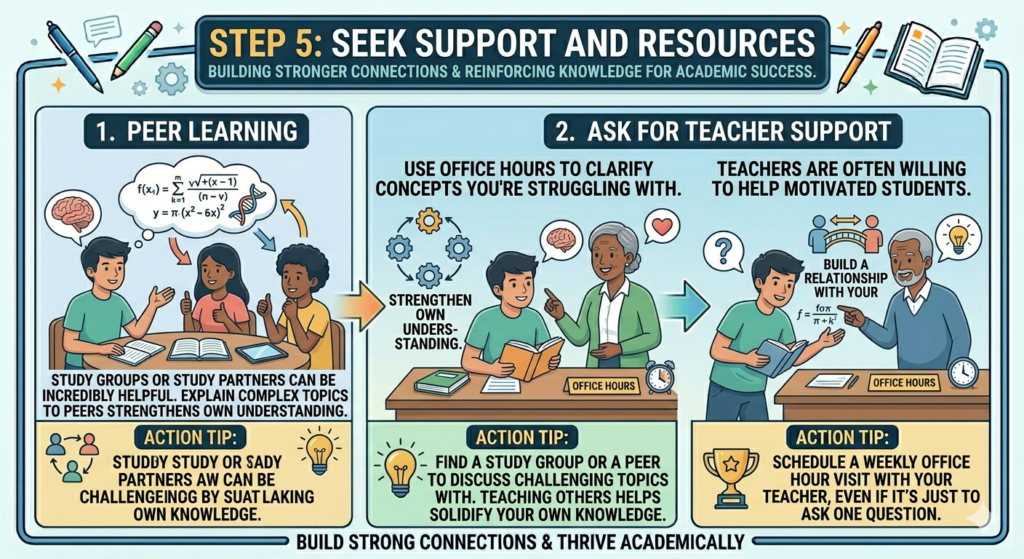
You’re not alone in this journey there are numerous resources available to help you improve:
Peer Learning
Study groups or study partners can be incredibly helpful. Explaining complex topics to peers can strengthen your own understanding. Peer learning is a great motivation strategy that can also help boost your grades.
Action Tip: Find a study group or a peer to discuss challenging topics with. Teaching others helps solidify your own knowledge.
Ask for Teacher Support
Use office hours to clarify concepts you’re struggling with. Teachers are often willing to help motivated students. Building a relationship with your teacher is a powerful tool in improving your grades.
Action Tip: Schedule a weekly office hour visit with your teacher, even if it’s just to ask one question.
Step 6: Improve Your Test-Taking Strategies
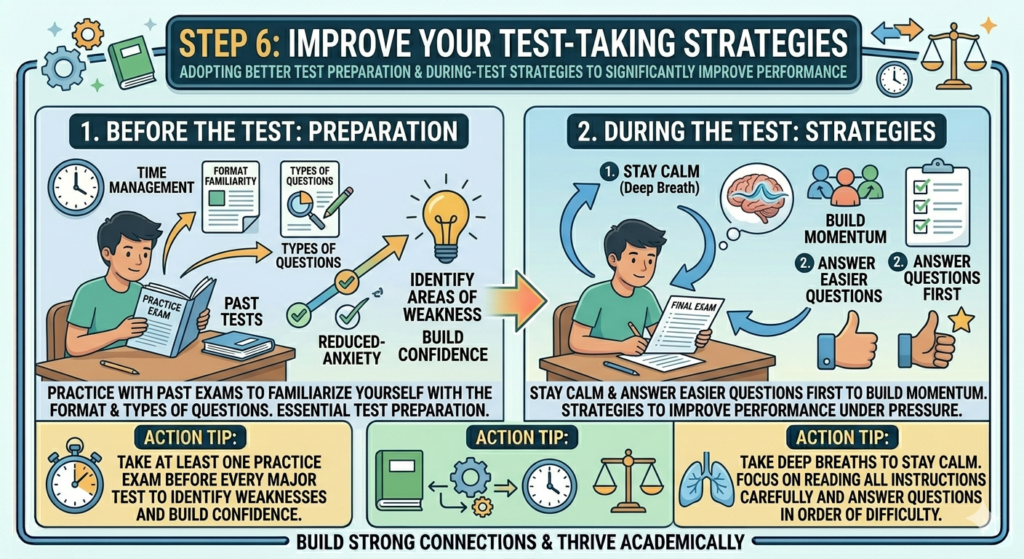
If exams are where you’re struggling the most, adopting better test preparation strategies can significantly improve your performance:
Before the Test
Practice with past exams to familiarize yourself with the format and types of questions. This is an essential part of test preparation and helps reduce anxiety.
Action Tip: Take at least one practice exam before every major test to identify areas of weakness and build confidence.
During the Test
Stay calm and answer easier questions first to build momentum. Test-taking strategies like this can help improve your performance under pressure.
Action Tip: Take deep breaths to stay calm. Focus on reading all instructions carefully and answer questions in order of difficulty.
Step 7: Track Your Progress and Adjust
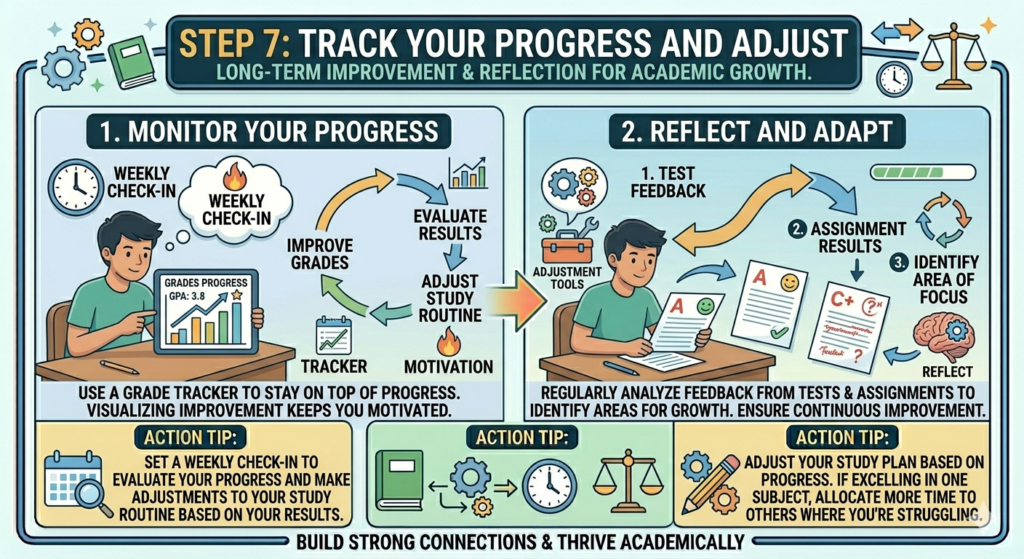
Long-term improvement comes from consistent effort and reflection. Here’s how to keep track of your progress and make adjustments as needed:
Monitor Your GPA
Use a grade tracker to stay on top of your progress. Visualizing improvements helps you stay motivated.
Action Tip: Set a weekly check-in to evaluate your progress and make adjustments to your study routine based on your results.
Reflect and Adapt
Regularly analyze feedback from tests and assignments to identify areas that need more focus. Academic habits like this ensure continuous growth and improvement.
Action Tip: Adjust your study plan based on your progress. If you’re excelling in one subject, allocate more time to others where you’re struggling.
Conclusion
Improving your grades fast, even if you’re currently failing, is possible with the right combination of strategies and mindset. By establishing a structured study routine, leveraging technology, practicing active learning, and managing stress, you can start seeing real improvements in no time. Remember, it’s not about working harder, but working smarter. Stick with these actionable strategies, stay consistent, and soon you’ll be on your way to achieving the grades you want.
For a complete breakdown of how to get good grades in school, explore our pillar guide.
References:
- APA Mindfulness Article: Mindfulness and Academic Success
- NEA Academic Habits Article: The Importance of Academic Habits
- Mindful Schools Article: Using Mindfulness to Reduce Stress

Great content! Keep up the good work!
unlocker.ai – The Ultimate AI Tool for Bypassing Restrictions and Unlocking Content Seamlessly!
gta 5 boosting service trusted gta modded accounts
wild truck demo wild truck play online
По району: ремонт и отделка квартир в Якиманихе, Кострома сметы по адресам, средняя цена за м? и стоимость отдельных работ.
The best of the best https://franchises1.rmdmhub.com/betting-in-ethiopia-with-zufan-bet-opens-new-opportunities-for-players/
wild truck free spins feature wild trucks game online
погода в алматы новости самые свежие новости
Любишь охоту? товары для охоты предоставляет большой ассортимент для охоты, туризма и активного отдыха. На сайте собраны специализированное снаряжение, охотничья одежда, обувь, оптические приборы, полезные аксессуары и туристическое снаряжение. Выбирайте подходящие товары, находите подходящие решения и оформляйте заказ онлайн. Большой ассортимент поможет собрать комплект для охоты или отдыха на природе.
Оформить сегодня цветы Омск удобно через каталог. Подбирайте пышные цветочные композиции для коллег. В каталоге представлены монобукеты. Оформляйте заказ и радуйте близких к важной дате.
Сериал в интернете смотреть сверхъестественное 2 сезон в HD-качестве можно прямо на сайте. Все сезоны и серии доступны для просмотра. Наблюдайте за историей Сэма и Дина, которые сражаются с демонами и монстрами. В каждой серии встречаются демоны, ангелы, призраки и монстры. Кастиэль становится союзником Винчестеров, а опасные враги становятся причиной новых приключений. Выбирайте нужный сезон и серию и погружайтесь в атмосферу мистического сериала.
Нужно иптытание средств измерений? получить утверждение типа средств измерений организация испытаний, подготовка документов, получение свидетельства и внесение СИ в Госреестр. Сопровождение процедуры на всех этапах с учетом требований законодательства.
Ищете товары для охоты? товары для охоты собрал широкий выбор для охоты, туризма и активного отдыха. В ассортименте доступны охотничья экипировка, одежда, треккинговая обувь, оптические приборы, аксессуары и снаряжение для походов. Выбирайте подходящие товары, ориентируйтесь на свои задачи и заказывайте необходимые товары. Удобный каталог поможет быстро найти нужные товары.