Tensions escalated in Minneapolis after a U.S. Border Patrol agent fatally shot a 37-year-old man during a federal immigration operation, triggering widespread protests, political backlash, and a growing dispute between state and federal authorities.
The victim was identified by family members as Alex Pretti, an intensive care unit nurse who had previously participated in demonstrations against the federal government’s immigration policies. The shooting occurred late Friday near Nicollet Avenue, drawing hundreds of protesters into the streets despite subzero temperatures.
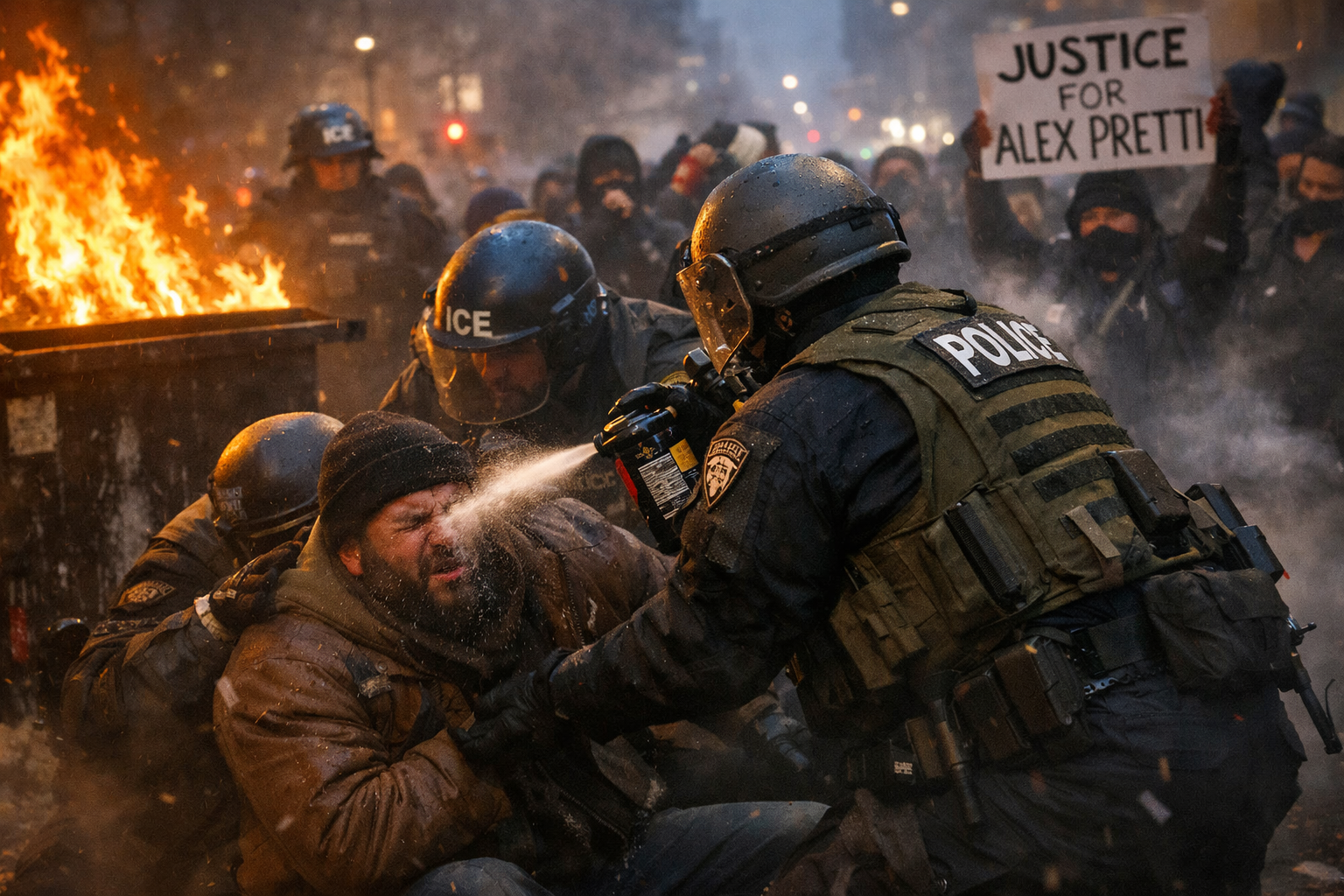
Following the incident, demonstrators clashed with federal officers, who used batons, pepper spray, and flash-bang devices to disperse crowds. Minnesota National Guard troops were deployed to assist local police under orders from Governor Tim Walz, according to state officials.
Conflicting Accounts of the Shooting
Details surrounding the moments leading up to the shooting remain unclear. Minneapolis Police Chief Brian O’Hara said investigators have limited information and urged calm while authorities work to establish the facts.
The Department of Homeland Security stated that federal officers fired “defensive shots” after a man carrying a handgun approached them and resisted efforts to disarm him. However, multiple bystander videos circulating online appear to show Pretti holding a cellphone, with no visible weapon in his hands.
Police later confirmed that Pretti was believed to be a lawful gun owner with a valid permit to carry.
DHS Secretary Kristi Noem said Pretti had attempted to interfere with an active law enforcement operation but did not clarify whether he drew or aimed a firearm at officers. Federal officials confirmed that the agent involved is an eight-year Border Patrol veteran.
Political Fallout and National Reaction
The shooting quickly ignited political controversy. Several Democratic lawmakers, including Rep. Alexandria Ocasio-Cortez, demanded that federal immigration officers leave Minnesota. She also called on Congress to block funding for U.S. Immigration and Customs Enforcement, arguing that lawmakers must act to prevent abuse of authority.
Senate Democratic Leader Chuck Schumer later announced that Democrats would not support a federal spending package that includes funding for the Department of Homeland Security. The move raises the possibility of a partial government shutdown when funding expires on January 30.
Former President Donald Trump criticized state and city leadership on social media, accusing Governor Walz and Minneapolis officials of fueling unrest. Trump questioned why local police were not in charge of protecting federal officers and shared images of a firearm authorities said was recovered at the scene.
Family Demands Accountability
Pretti’s family released a strongly worded statement Saturday evening, expressing grief and anger over the killing. They described him as compassionate and deeply committed to helping others through his work as a nurse.
The family disputed official claims, stating that videos clearly show Pretti holding his phone while raising his other hand defensively during the confrontation. They accused federal officials of spreading false narratives and called for the truth to be made public.
Growing Unrest in Minneapolis
The shooting occurred just over a mile from another fatal encounter earlier this month in which an ICE officer killed Renee Good, also 37, sparking weeks of demonstrations across the city.
Friday night’s protests included blocked streets, burning dumpsters, and chants demanding the removal of ICE from Minneapolis. Officers were seen forcibly detaining protesters, while others shouted insults and blew whistles in protest.
As night fell, the atmosphere shifted. Hundreds gathered quietly at a growing memorial near the shooting site, holding candles and signs reading “Justice for Alex Pretti.” Nearby businesses opened their doors to offer warmth, water, and food to demonstrators.
Governor Walz said the state would take the lead in investigating the shooting, citing a lack of trust in federal authorities. However, Minnesota Bureau of Criminal Apprehension Superintendent Drew Evans said federal officers initially prevented state investigators from accessing the scene, even after a judicial warrant was obtained.
Protests Spread Nationwide
Demonstrations related to the shooting were reported in several major cities, including New York, Washington, and Los Angeles, as activists renewed calls for greater oversight of federal immigration enforcement.
Local resident Caleb Spike, who traveled from a nearby suburb to attend the vigil, said frustration is mounting. “It feels like something worse happens every day,” he said. “What’s happening in our community is deeply wrong.”