
A Simple, Practical Guide That Really Works
Middle school can feel confusing and stressful for many students. Things change very fast. Suddenly, there are more subjects, different teachers, more homework, and higher expectations. A lot of students who did well in elementary school start struggling here — not because they are weak, but because they don’t know how to handle the change.
The good news is this:
Getting good grades in middle school is not about being “super smart.” It’s about building simple daily habits that actually work.
This guide will show you exactly how to do that.
Why Getting Good Grades in Middle School Is Harder Than It Looks

Middle school is a big step up. Students are expected to be more independent, but many are not taught how to manage that responsibility.
Some common challenges include:
- Having multiple teachers with different rules: Each teacher has their own expectations, grading style, and way of teaching. This can be overwhelming when you’re trying to balance all of them at once.
- More homework and projects at the same time: Instead of one teacher assigning work, you now have multiple teachers, each with their own deadlines and assignments. Keeping track of everything can feel chaotic.
- Tests and quizzes happening more often: With the increased number of subjects and teachers, you’re likely to have more tests and quizzes throughout the week. It can be hard to keep up with studying for all of them.
- Feeling pressure to fit in socially: Middle school is a time when friendships and social pressures become more significant, which can distract from schoolwork.
- Getting distracted easily by phones, games, or social media: Technology can be a huge source of distraction, making it harder to focus on assignments.
When all of this happens together, grades can start to drop — even for good students.
Common Reasons Middle School Students Struggle With Grades

Most students don’t struggle because they don’t care. They struggle because of a few common problems:
- No Clear Daily Study Routine: Without a clear plan for studying, students often find themselves scrambling at the last minute. A lack of routine means important tasks get forgotten or rushed through.
- Doing Homework Late at Night: Studying or doing homework late at night leads to poor sleep, which can hurt memory and focus the next day. Staying up late to finish homework becomes a cycle that can affect grades over time.
- Trying to Study Everything at the Last Minute: Cramming might seem like an easy way out, but it’s rarely effective. Last-minute studying leads to stress and forgetting important details. It’s better to break up study sessions over time.
- Feeling Shy or Scared to Ask Teachers Questions: Asking for help can seem intimidating, but not doing so can lead to confusion and misunderstandings in class. Most teachers want to help, and you should feel comfortable reaching out when something’s unclear.
A good teacher doesn’t just give answers; they teach you how to find them yourself. - Parents Either Pushing Too Hard or Not Checking At All: A lack of parental involvement can cause students to fall behind, but too much pressure can hurt their motivation. Finding the right balance is key to helping students succeed.
Once these issues are fixed, grades usually improve quickly.
A Simple Daily Study Routine for Middle School Students
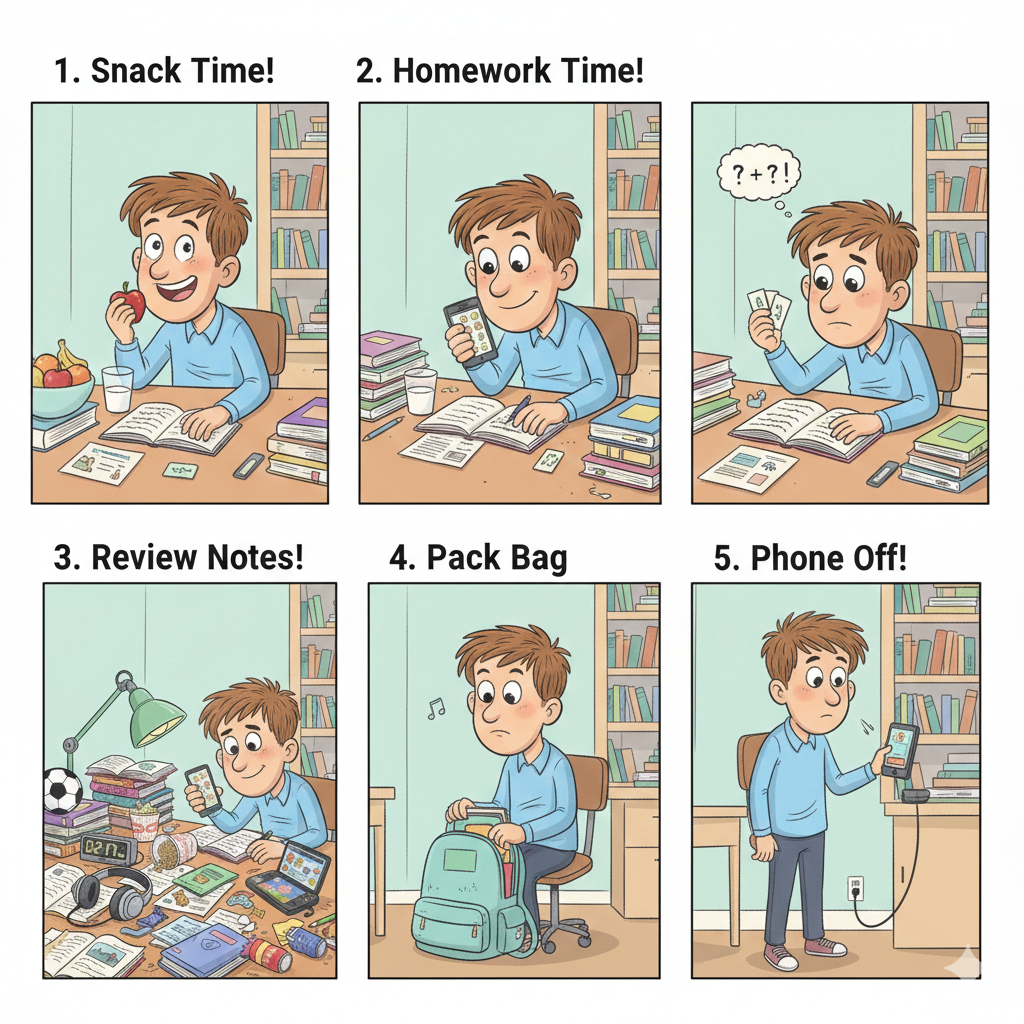
You don’t need to study for hours. You need a simple routine you can follow every school day.
Here’s an easy routine that works for most middle school students:
- After-School Break (20 minutes): Relax, eat, move around — do something that clears your mind.
- Homework First: Finish assigned homework before anything else, and make sure to break up larger assignments into smaller tasks.
- Short Revision (20-30 minutes): Review what was learned that day. This helps reinforce information before it slips away.
- Prepare for Tomorrow: Pack your bag, check assignments, and organize materials for the next day.
- Phone-Off Time: No screens at least 30–60 minutes before sleep. Studies show that screen time before bed can disrupt sleep, which is important for focus and memory the next day.
This routine keeps work from piling up and reduces stress.
How to Study Smart in Middle School (Not Longer Hours)
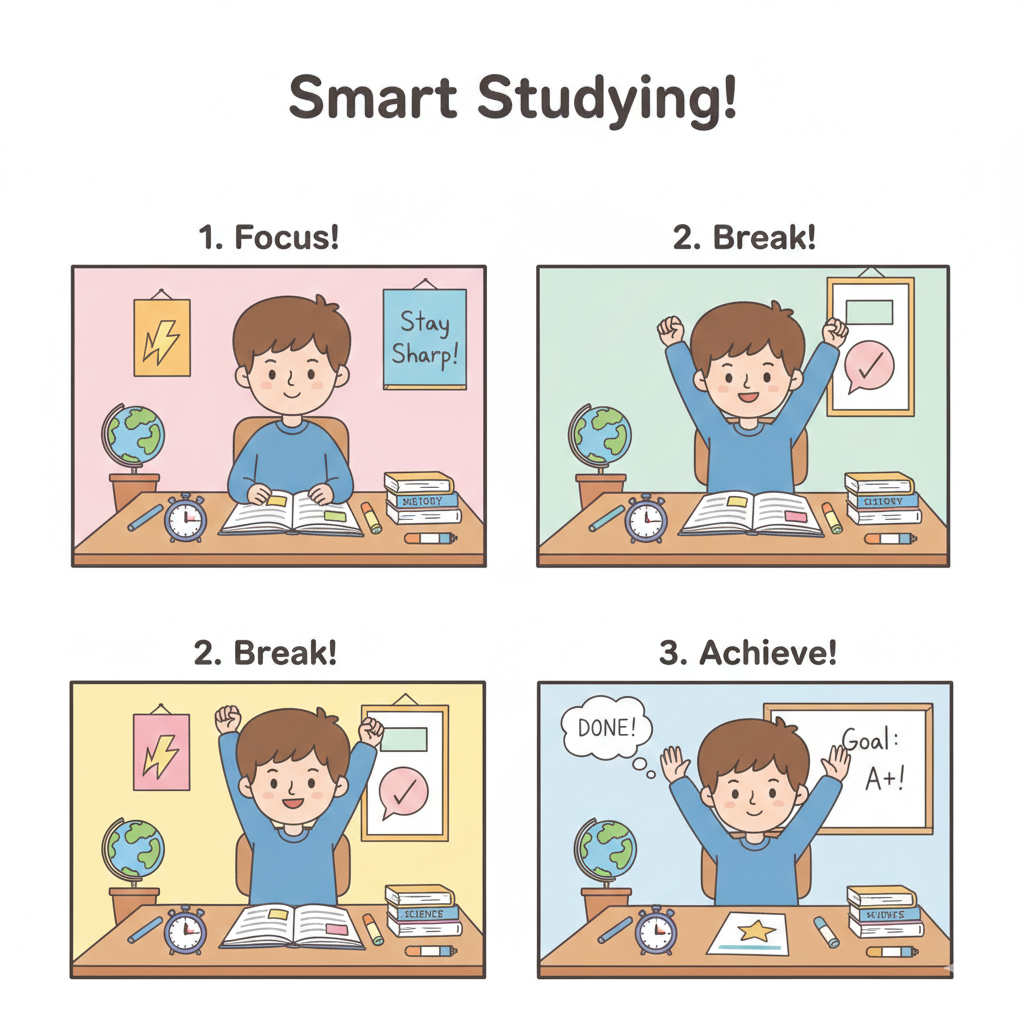
Studying longer doesn’t always mean studying better.
Smart study habits include:
- Studying in short, focused sessions: Research shows that shorter study sessions with breaks in between can help improve focus and memory. Aim for 25–30 minute sessions followed by 5-minute breaks.
- Reviewing notes the same day they are taken: Review what you learned while it’s still fresh in your mind. Doing this every day helps you retain information better than waiting until the night before a test.
- Breaking big topics into small parts: Instead of cramming everything at once, break large topics into manageable chunks. This makes learning more digestible.
- Studying a little every day instead of cramming: Consistency is key! Spending just 20-30 minutes a day on each subject helps you gradually absorb the material instead of rushing through it at the last minute.
Even 30 minutes of focused study is better than 2 hours of distracted studying.
How Parents Can Help Middle Schoolers Get Better Grades

Parents play a huge role in middle school success — even when students want independence.
Here are a few practical ways parents can help:
- Providing a Quiet Study Space: A designated, distraction-free study area can make a huge difference in a student’s ability to focus.
- Checking Homework Without Doing It For Them: It’s important for parents to check that homework is being completed, but not to take over the work. Encouragement and support are key!
- Talking Regularly About School, Not Just Grades: Open communication about school (not just grades) can help students feel more supported. Ask about the challenges they’re facing, not just the results.
- Communicating with Teachers When Needed: If your child is struggling, reach out to teachers for advice. They often have helpful insights into where your child might need additional support.
- Encouraging Effort Instead of Punishing Mistakes: Encourage your child to focus on their effort and improvement rather than punishing mistakes. This can help boost their confidence and motivation.
Too much pressure can hurt confidence, but zero involvement can hurt grades. Balance matters.
What to Do When Grades Start Dropping in Middle School
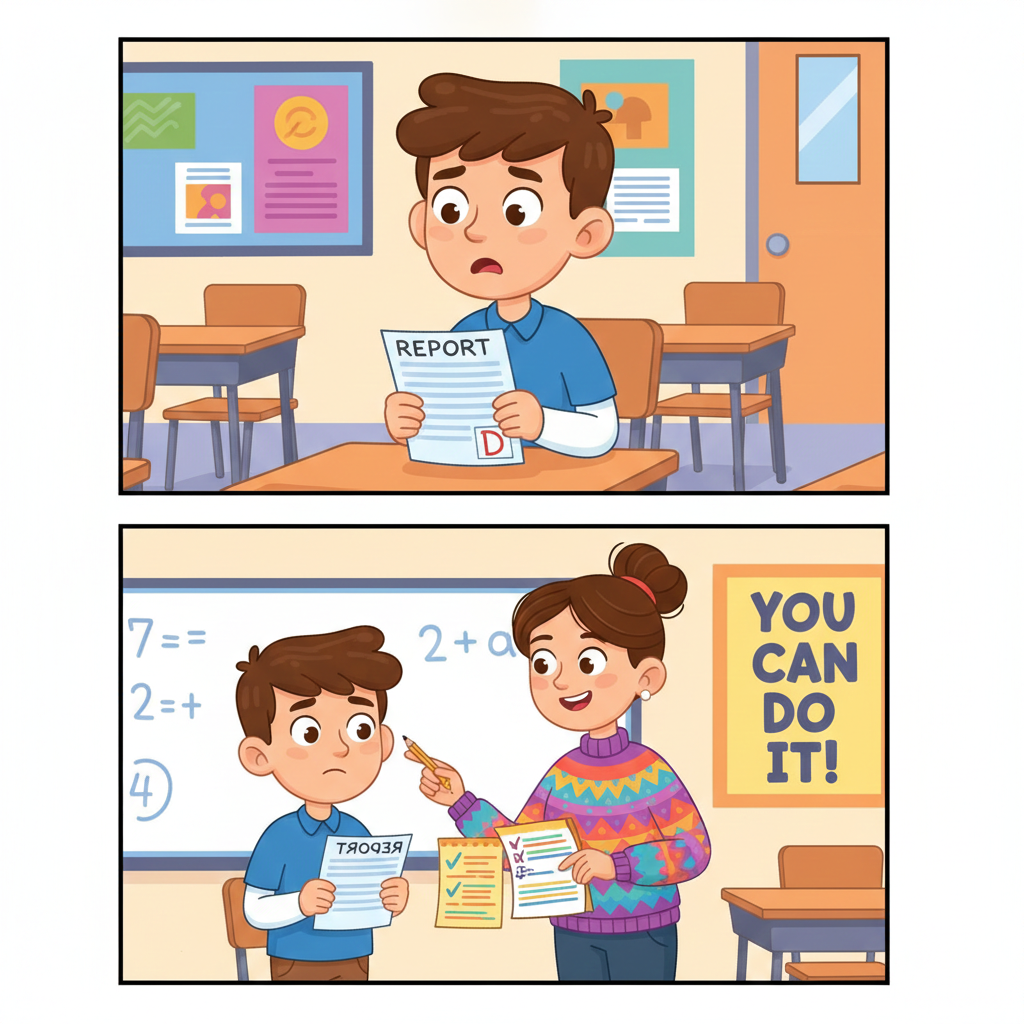
Bad grades happen — and they don’t mean failure.
When grades drop:
- Don’t Panic or Blame: Grades don’t define who you are. If grades start to drop, the first step is to stay calm and identify the cause.
- Find Out Which Subject Is Causing the Problem: Take a look at your grades and see which subject is affecting your overall performance. It’s easier to fix one area than to try to improve everything at once.
- Ask the Teacher for Feedback: Teachers can give valuable feedback on what you can do to improve. Don’t be afraid to ask!
- Focus on One Subject at a Time: Trying to improve all subjects at once can feel overwhelming. Instead, focus on improving in one subject before moving to the next.
- Improve Habits Before Adding More Study Time: Sometimes, simply changing a few habits (like studying earlier, using breaks, and avoiding distractions) can be more effective than studying longer hours.
Most grade drops are fixable with small changes.
Motivation and Confidence Tips for Middle School Students

Middle school students often feel discouraged after bad test results.
To stay motivated:
- Focus on Progress, Not Perfection: Don’t stress about being perfect. Celebrate small improvements along the way!
- Celebrate Small Improvements: Whether it’s understanding a difficult concept or raising your score by a few points, take time to appreciate your progress.
- Remember That Mistakes Help You Learn: Mistakes are part of the learning process. Instead of seeing them as failures, view them as opportunities to grow.
- Don’t Compare Yourself to Others: Everyone learns at their own pace. Comparing yourself to classmates can hurt your confidence. Focus on your own journey.
Confidence grows when students see effort turning into results.
Mistakes That Hurt Grades in Middle School

Avoid these common mistakes:
- Waiting Until the Last Minute to Study: Cramming may seem like an easy solution, but it leads to stress and forgetfulness. Start studying in advance.
- Using the Phone While Doing Homework: Phones can be a huge distraction. Keep your phone away when studying.
- Ignoring Teacher Feedback: Teacher feedback is a valuable tool for improvement. Always review it and use it to guide your study sessions.
- Skipping Revision Because “I Already Understand It”: Even if you think you understand something, reviewing it ensures you don’t forget key details.
Fixing these habits alone can raise grades.
Final Advice for Middle School Success

Middle school is where academic habits are formed. The routines and mindset students build now will help them for years to come. Don’t focus on perfection; focus on improvement.
Once these habits start working in middle school, students can improve even more by following a complete system for how to get good grades.
Good grades don’t come from pressure — they come from consistent, simple actions done every day.