As parents, we all want our children to grow up successful, confident, and capable. Morning habits for successful children play a crucial role in shaping their mindset, discipline, and daily performance. Research shows that starting the day with a structured morning routine for kids can significantly impact academic performance, emotional regulation, and overall well-being (American Academy of Pediatrics, 2022).
Whether preparing your child for school or simply aiming to set them up for a day of growth, a morning routine checklist for school children is a key element. In this blog, we’ll explore science-backed benefits, age-wise routines, and practical tools like a morning routine chart for kids to help parents implement the perfect habits.
Why Are Morning Habits for Kids So Important?
Starting the day with a consistent routine is more than just keeping things organized. Studies show children who follow a morning routine for kids to boost focus have better attention, higher resilience, and improved academic performance (Child Development Journal, 2020).
Key Benefits:
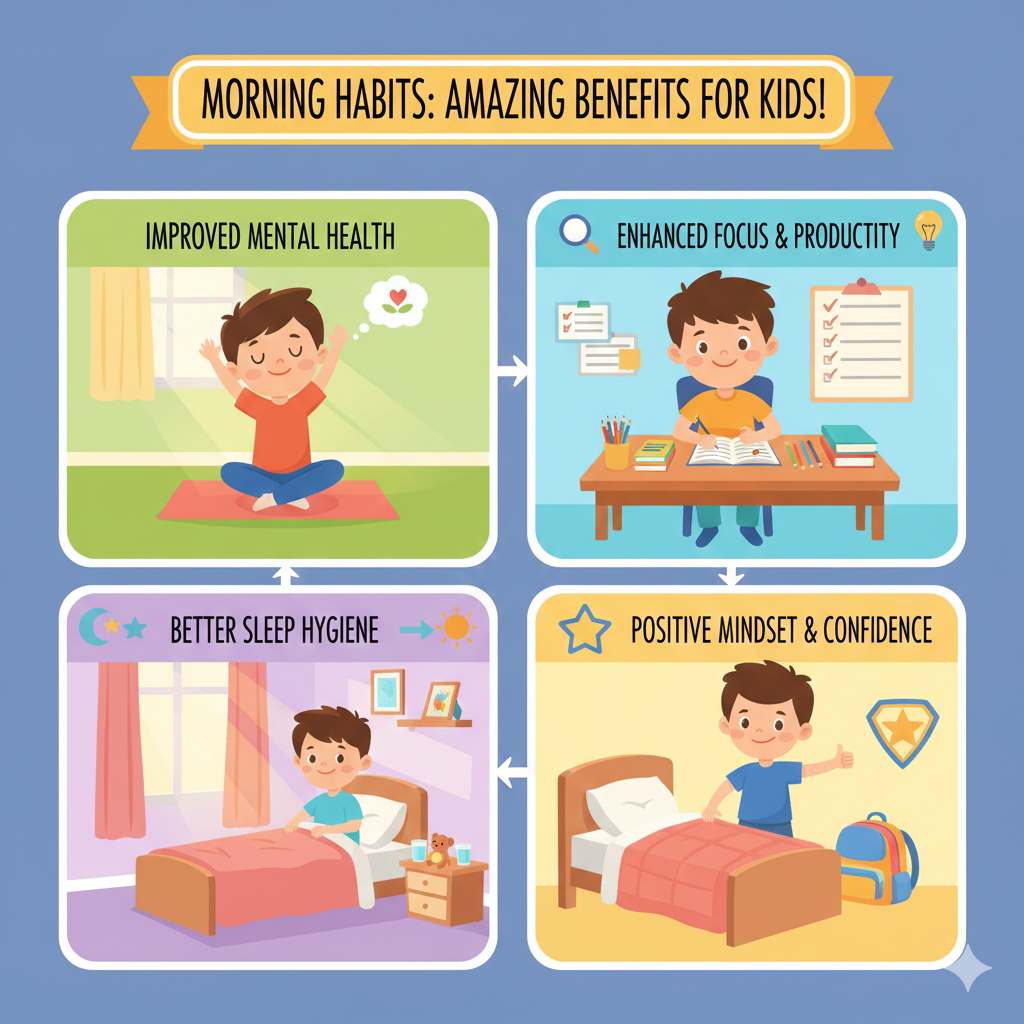
- Improved Mental Health: Positive morning activities like exercise, mindfulness, and healthy eating lower stress and improve emotional resilience.
(Evidence: A 2019 study in the Journal of Child Psychology found daily morning mindfulness reduced anxiety symptoms in children.) - Enhanced Focus and Productivity: Following a structured morning routine checklist for kids primes the brain for attention and memory tasks in school.
- Better Sleep Hygiene: A morning routine indirectly improves sleep quality by setting consistent wake times and encouraging earlier bedtimes (Sleep Research Society, 2021).
- Positive Mindset: Children who complete structured morning tasks feel accomplished and confident, which supports motivation and long-term goal-setting.
Creating a Morning Routine for Kids
Crafting a morning routine for kids to boost focus and productivity starts as soon as they wake up. Below is a detailed, age-based guide with research-backed benefits.
Morning Habits for Toddlers (Ages 2-4)
Toddlers are beginning to grasp routines. Keep it simple, fun, and consistent.
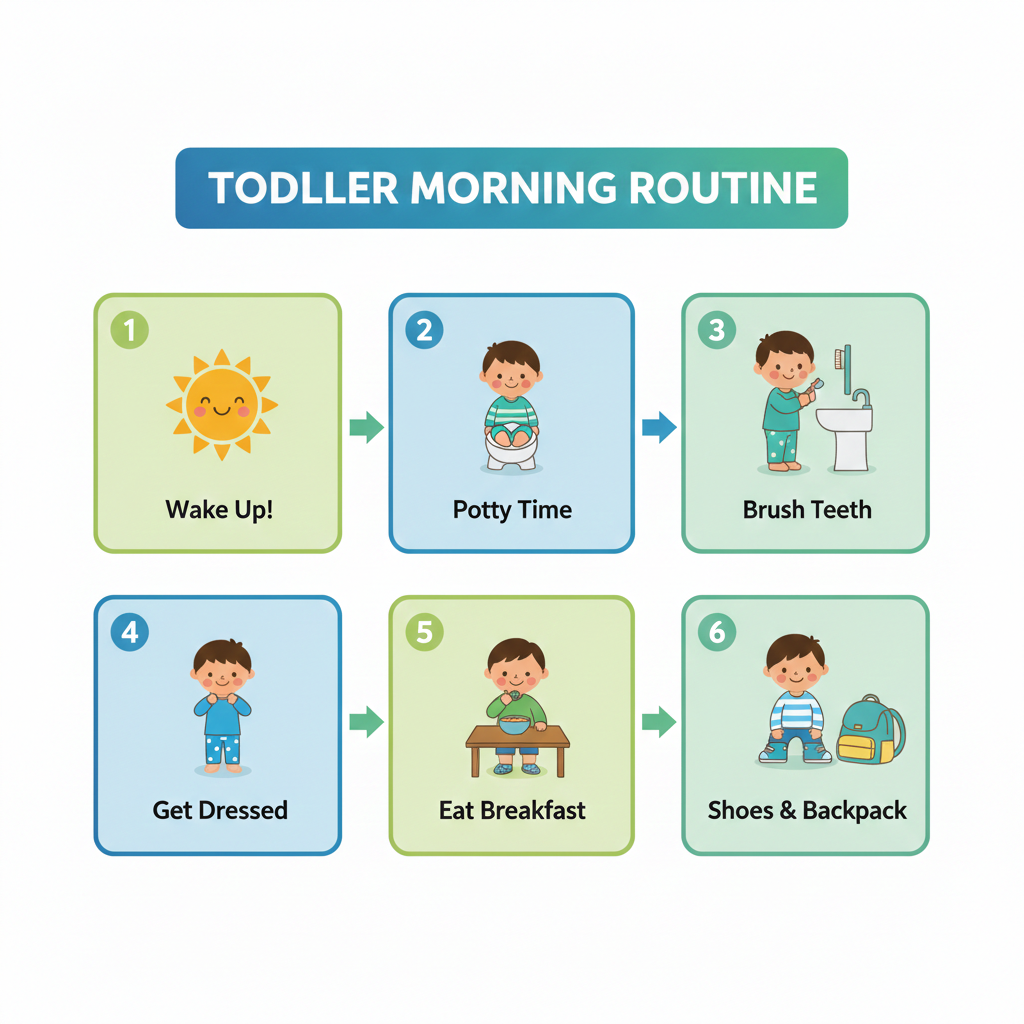
Morning Routine for Kids (Toddlers):
- Wake up at the same time each day
- Builds circadian rhythm stability. Consistent wake-ups improve mood and attention throughout the day (National Sleep Foundation, 2022).
- Hydrate
- Water boosts metabolism and alertness. Dehydration can reduce focus and increase irritability even in toddlers.
- Stretch and move
- Dancing or simple stretches improve blood flow to the brain and support early motor skill development.
- Healthy breakfast
- Foods rich in protein and complex carbs improve attention span and learning readiness.
- Get dressed independently
- Encourages autonomy and decision-making skills.
- Teeth brushing
- Supports hygiene habits; fun songs improve compliance.
- Prepare for the day with a visual chart
- Morning routine charts for kids increase consistency and reduce parental reminders.
Morning Habits for School-Age Kids (Ages 5-10)
At this stage, children can follow morning routine checklists for school children independently.
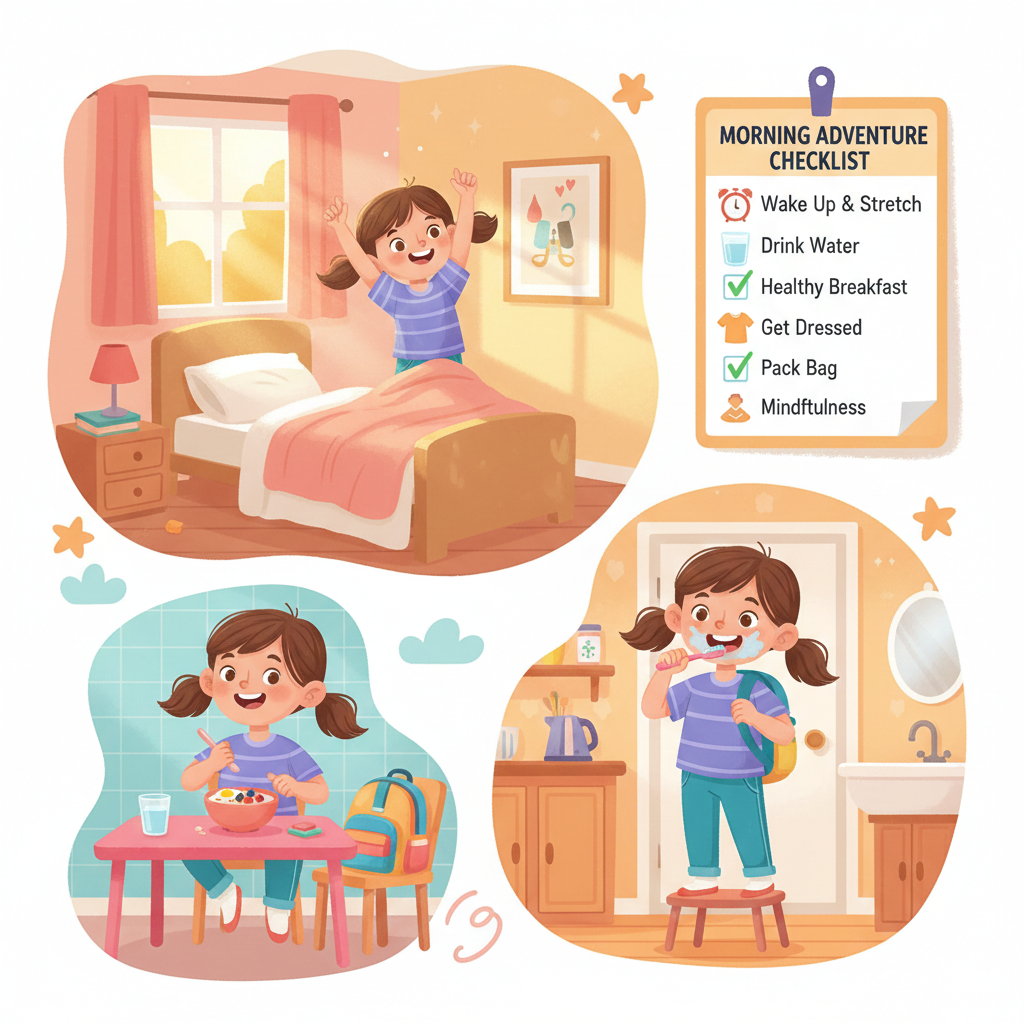
- Wake up on time
- Consistent wake-ups improve cognitive performance and attention in school (Frontiers in Psychology, 2020).
- Start with hydration
- Maintains focus and energy during morning learning activities.
- Healthy breakfast
- Protein + fiber + healthy fats enhance memory retention and school performance.
- Dress and get ready independently
- Fosters confidence and executive functioning skills.
- Make the bed
- Small tasks increase a sense of responsibility and daily accomplishment.
- Brush teeth & wash face
- Reinforces hygiene; morning routines improve emotional stability.
- Pack school bag
- Prepares children for organized, less stressful school days.
- Mindfulness or light exercise (5–10 mins)
- Boosts attention, emotional regulation, and cognitive flexibility.
Morning Habits for Tweens and Teens (Ages 11+)
For adolescents, balance independence with responsibility.
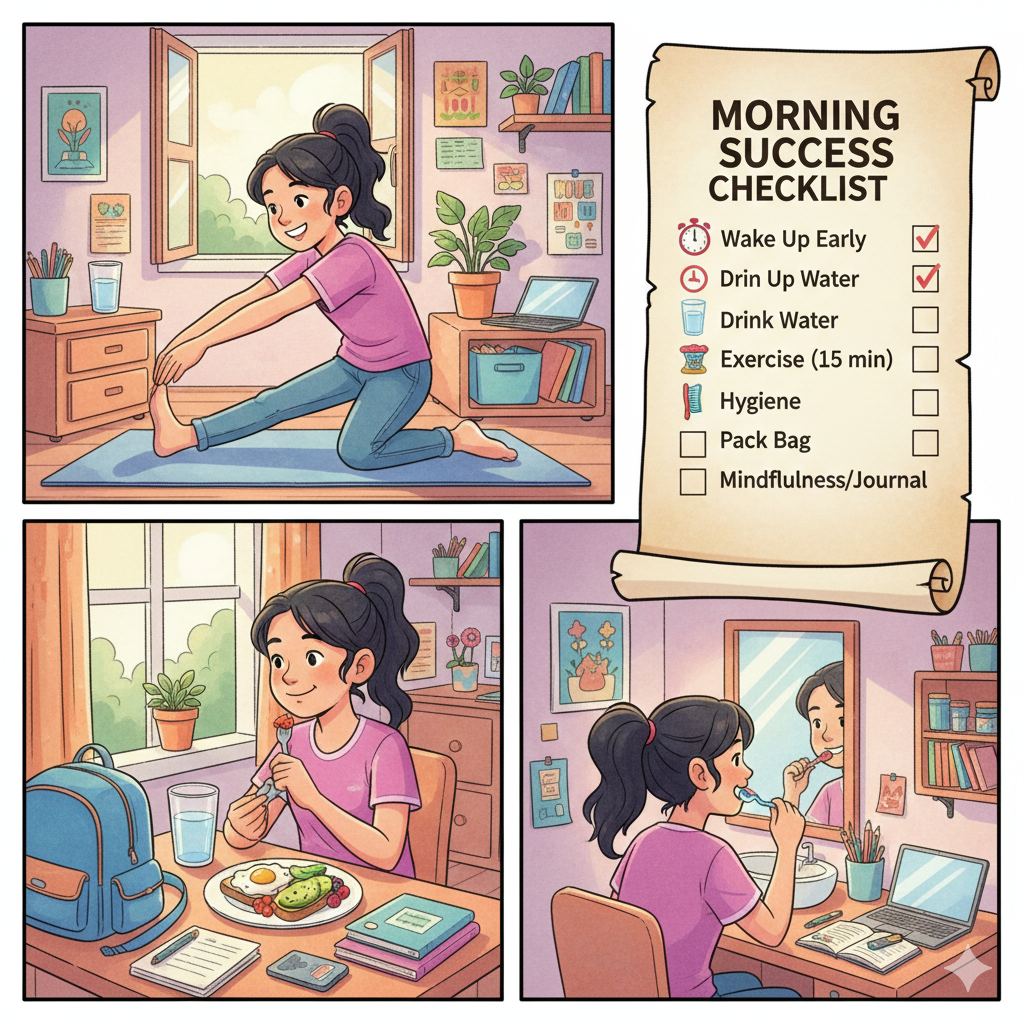
- Wake up early enough to avoid rushing
- Reduces morning stress, which improves focus and emotional regulation.
- Drink water
- Hydration supports memory, energy, and overall health.
- Exercise (10–15 mins)
- Boosts dopamine and endorphins, improving mood and cognitive alertness (Pediatrics, 2019).
- Balanced breakfast
- Supports sustained attention and academic performance.
- Personal hygiene independently
- Promotes self-confidence and social readiness.
- Prepare for the day
- Organizing school materials increases executive function and reduces stress.
- Mindful moments (journaling, breathing exercises)
- Encourages focus, reflection, and emotional regulation.
Morning Good Habits for Kids: What to Avoid
Common mistakes parents make:
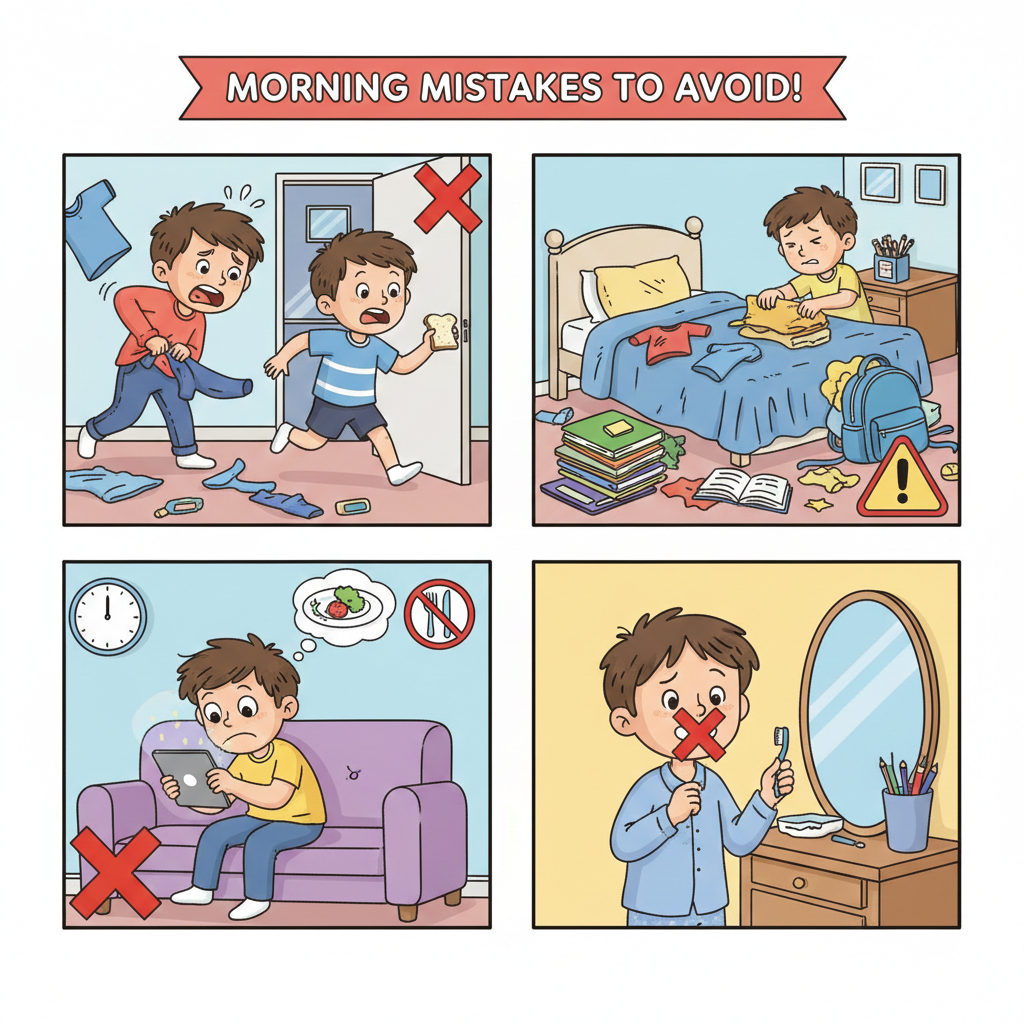
- Too Much Rushing: Stick to essential activities to prevent stress.
- Inconsistent Wake-Up Time: Disrupts circadian rhythm and focus.
- Skipping Breakfast: Reduces energy and cognitive function.
- Too Much Screen Time: Delays attention and slows morning productivity.
- Neglecting Hygiene: Leads to poor health habits.
Practical Tools: Morning Routine Checklists and Charts
Use morning routine charts for kids to simplify mornings. Visual aids help children follow steps without repeated reminders.
Example Checklist Table (for School Children):
| Task | Completed? |
|---|---|
| Wake up | ☐ |
| Drink water | ☐ |
| Brush teeth & wash face | ☐ |
| Get dressed | ☐ |
| Eat breakfast | ☐ |
| Pack school bag | ☐ |
| Leave for school | ☐ |
FAQs
How early should I wake my child for school?
Wake your child 1–1.5 hours before school to allow a calm, unrushed morning routine.
How can I ensure my child follows the routine?
Use a visible morning routine checklist for kids and encourage consistency with positive reinforcement.
What if my child resists the morning routine?
Make it engaging with choices, music, or gamified steps, and remain consistent.
Are there benefits to morning exercise for kids?
Yes, it boosts focus, mood, and cognitive performance throughout the school day.
How do I adapt the routine as my child grows?
Gradually add responsibilities and allow older children to manage more tasks independently.